Last update: Friday, May 24, 2026
Contents
I am downsizing. I must eliminate most of my professional library of computing references. This includes two family generations of computing materials; my father entered the computer field in 1946 at the Office of Naval Research and retired 22 years later. I learned programming in the early 1970s. There was perhaps a one-year gap between his ACM and IEEE memberships and mine.
We will have an estate sale on the weekend of June 13-14 just south of Saint Paul, Minnesota. While I might eliminate or add a few items before that date, I expect a lot of these will show up in that sale. Items that generate a lot of interest might be placed in eBay auctions. I will publish more information as the situation progresses.
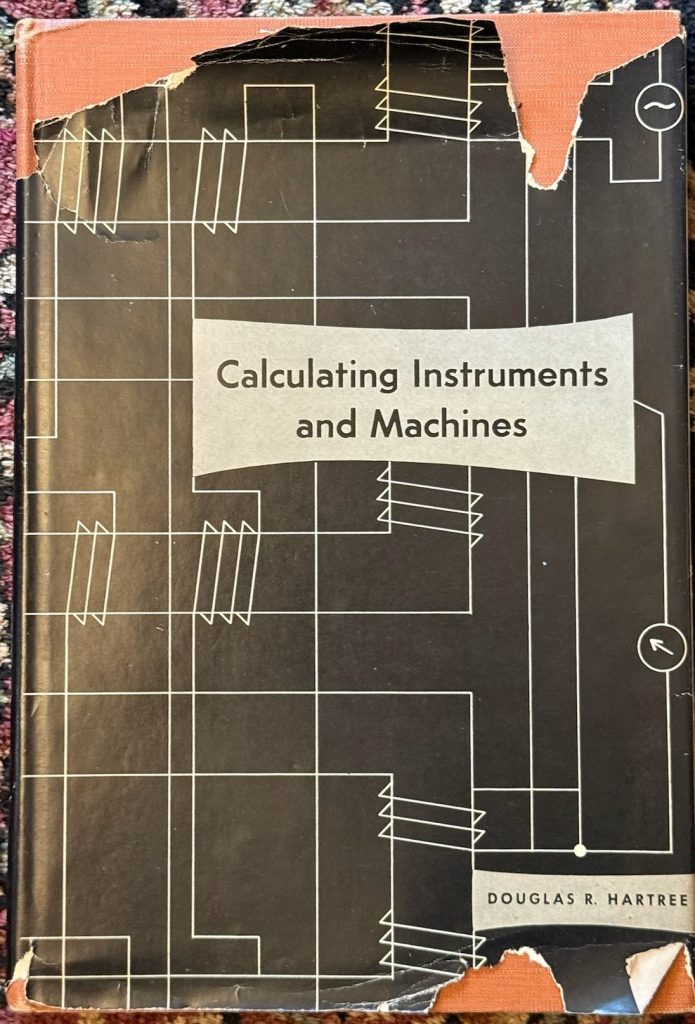
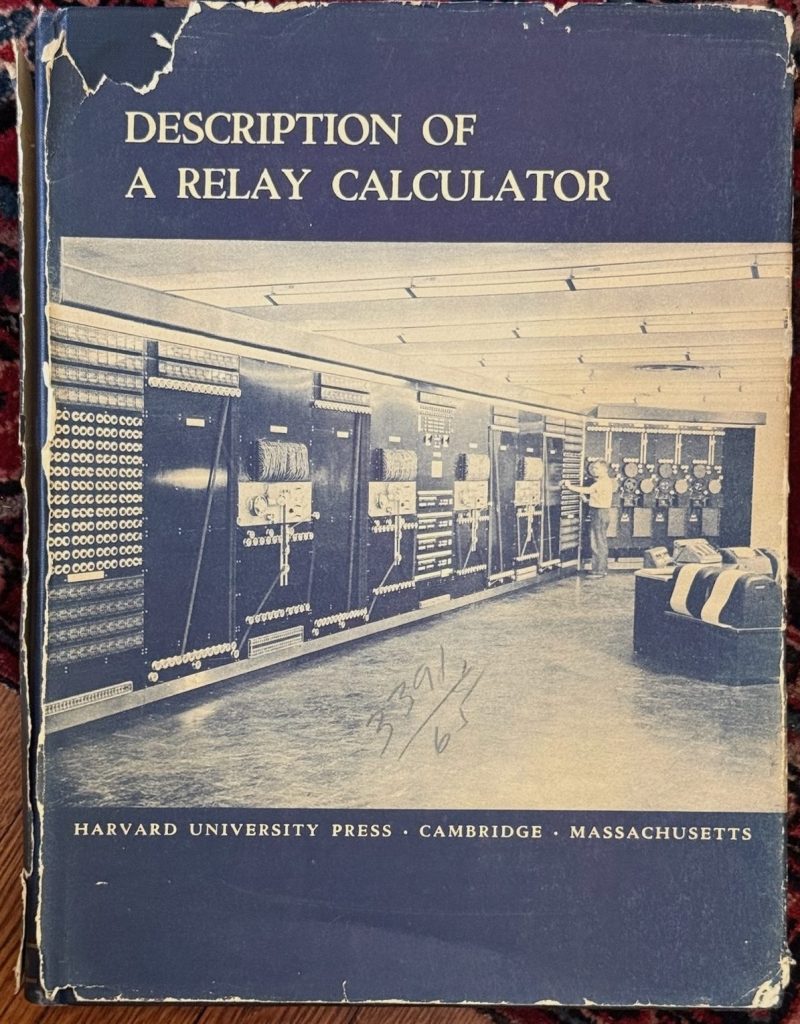
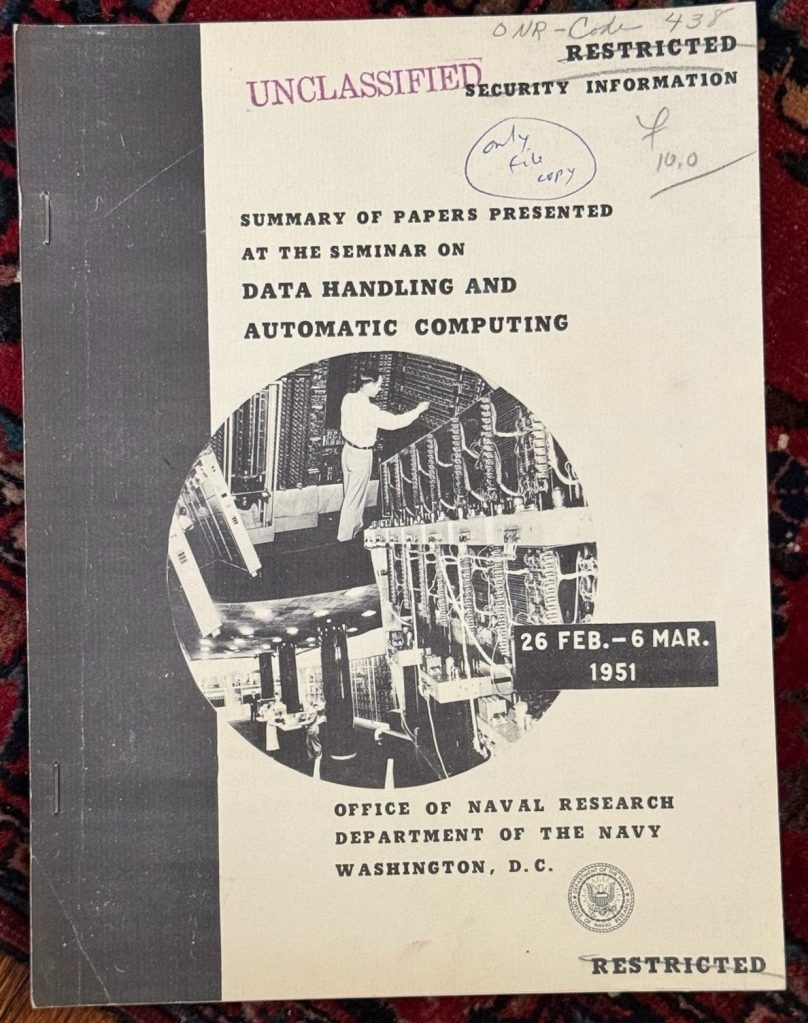
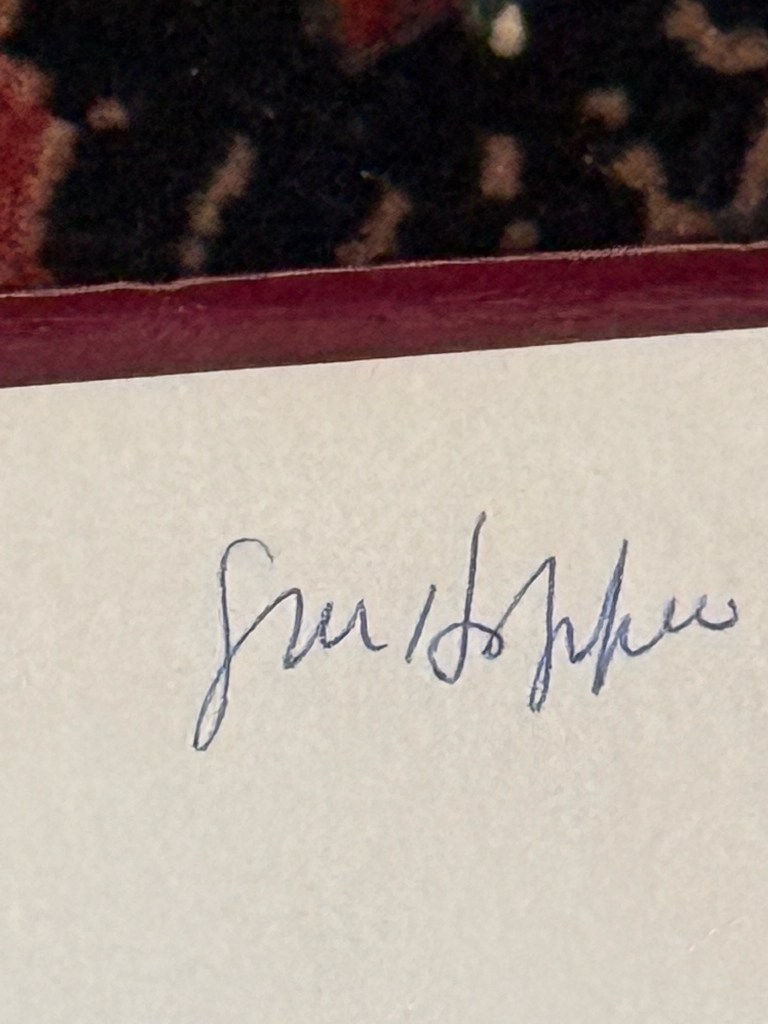
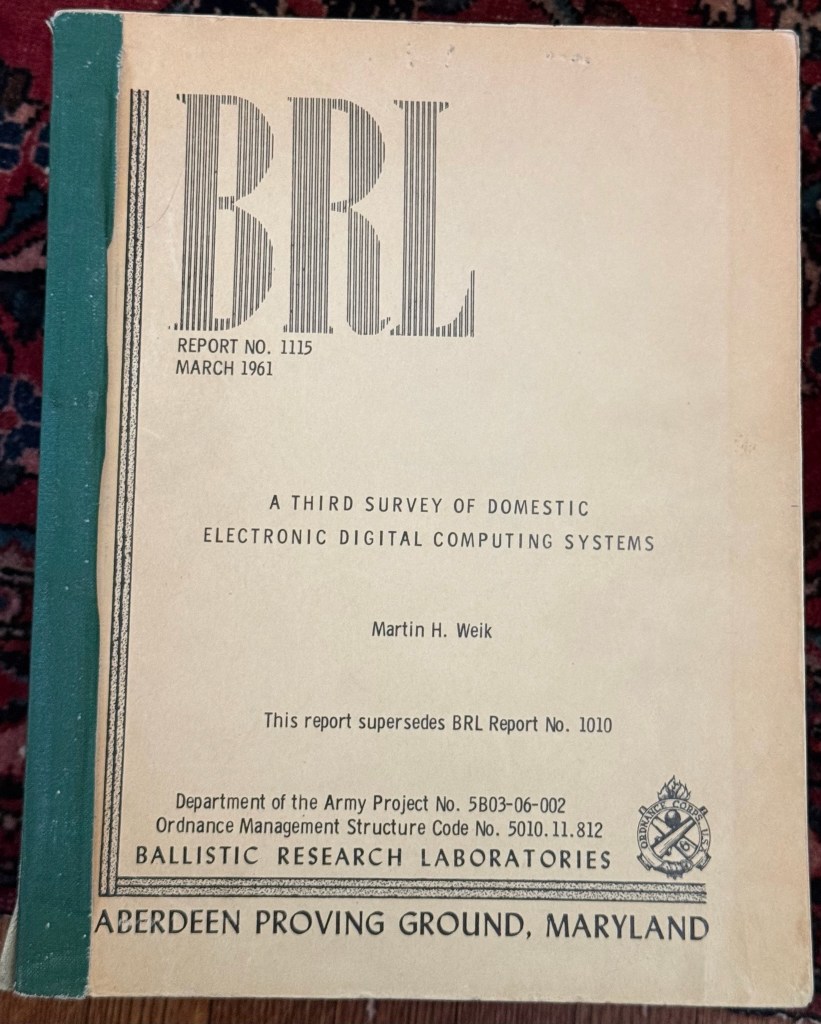
I’ve always been interested in computer history. My father’s materials were a huge help. My children are interested in a few things, like my father’s pioneering surveys of 1940s computing projects, or items signed by his friend and colleague Grace Hopper. A few of these items show up for sale for the time being, at least.
The Books
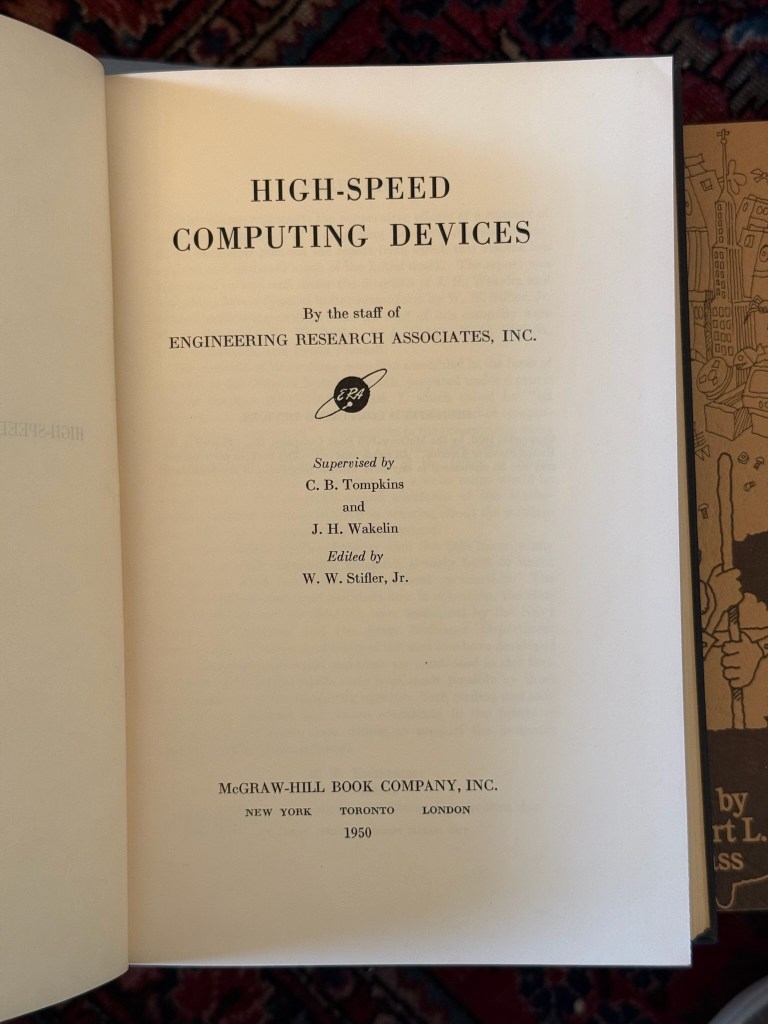
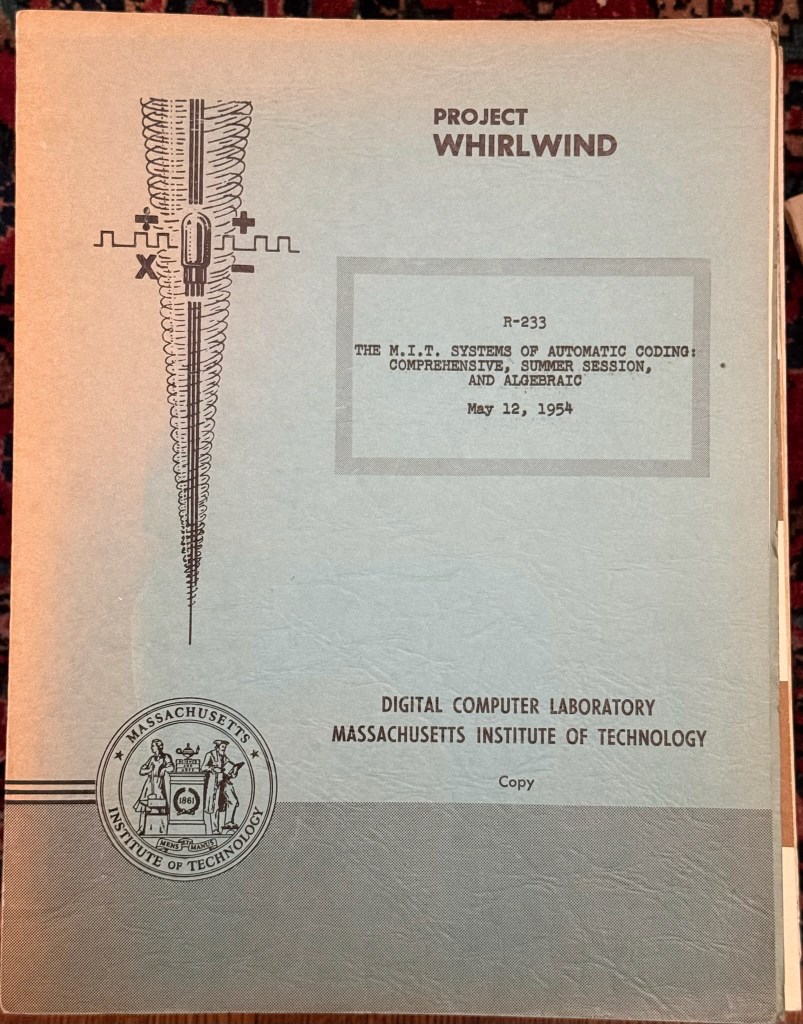
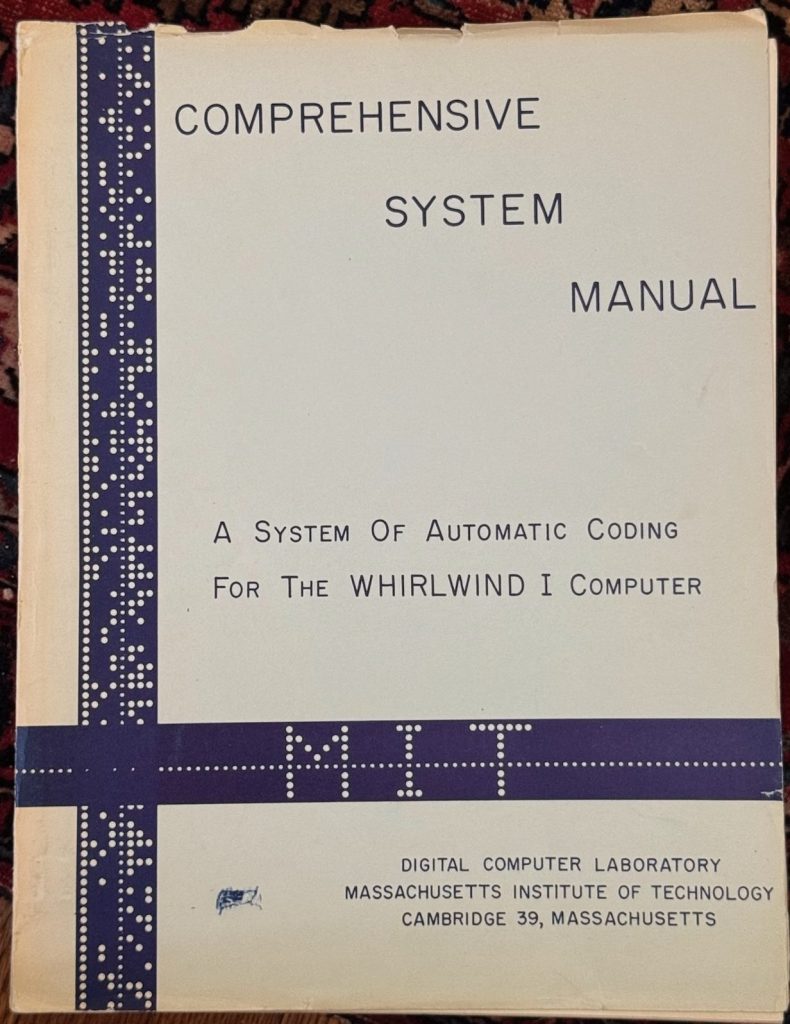
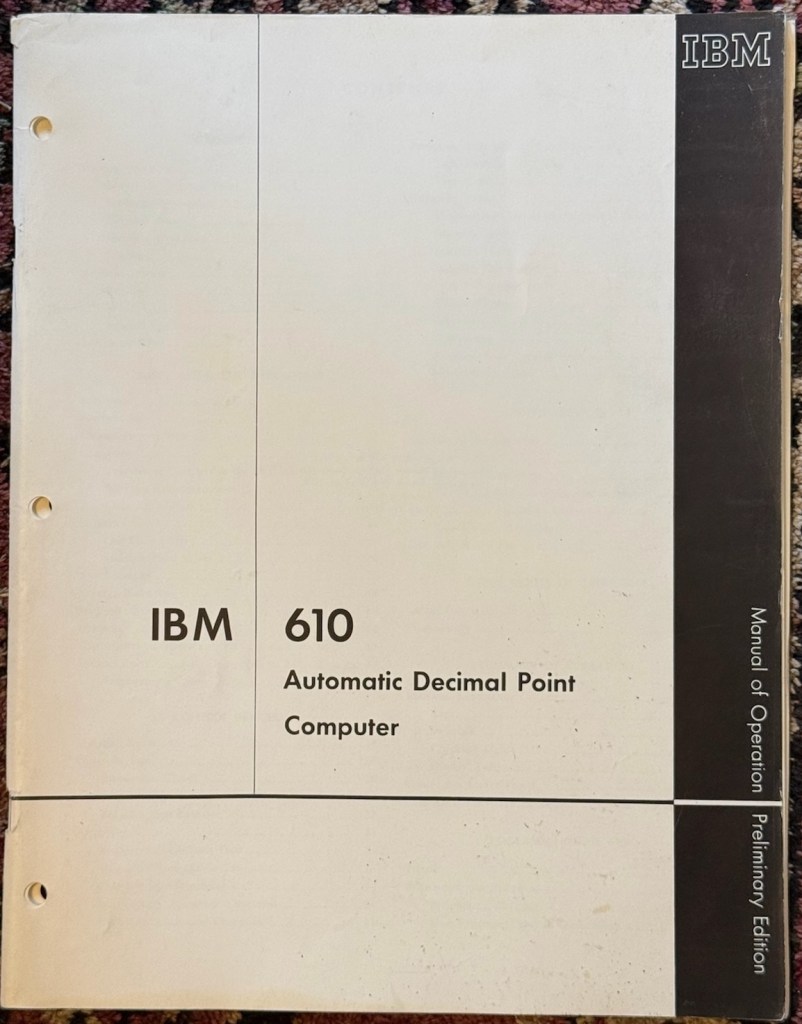
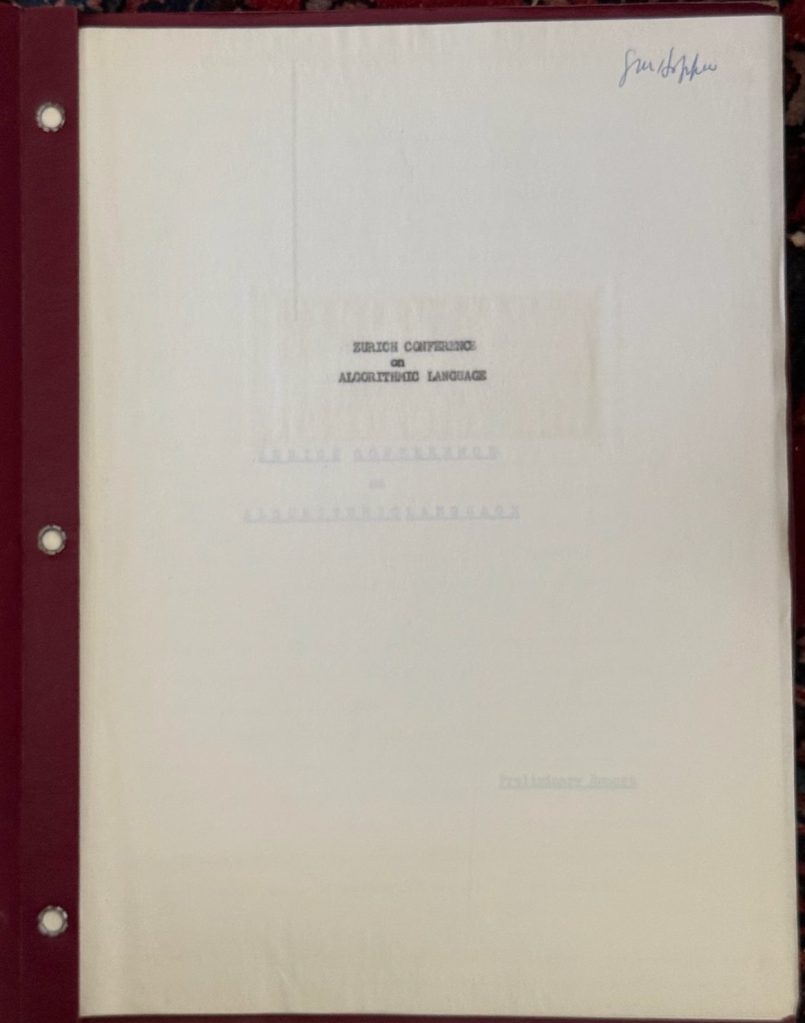
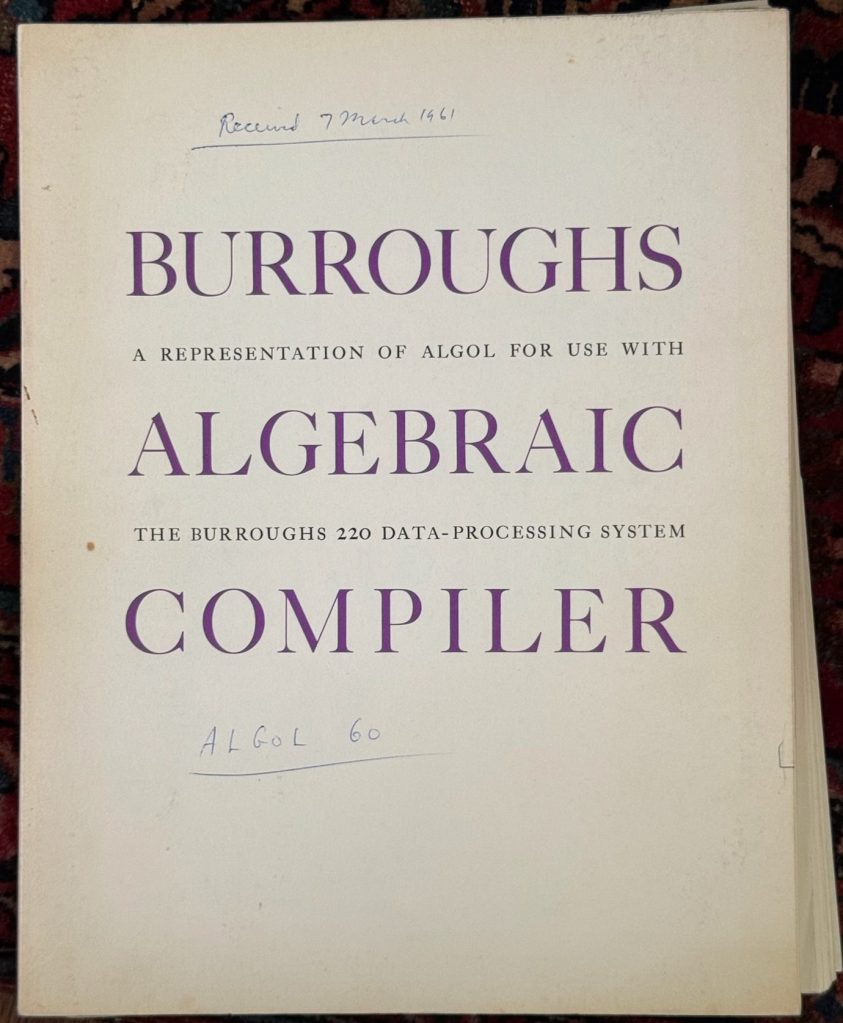
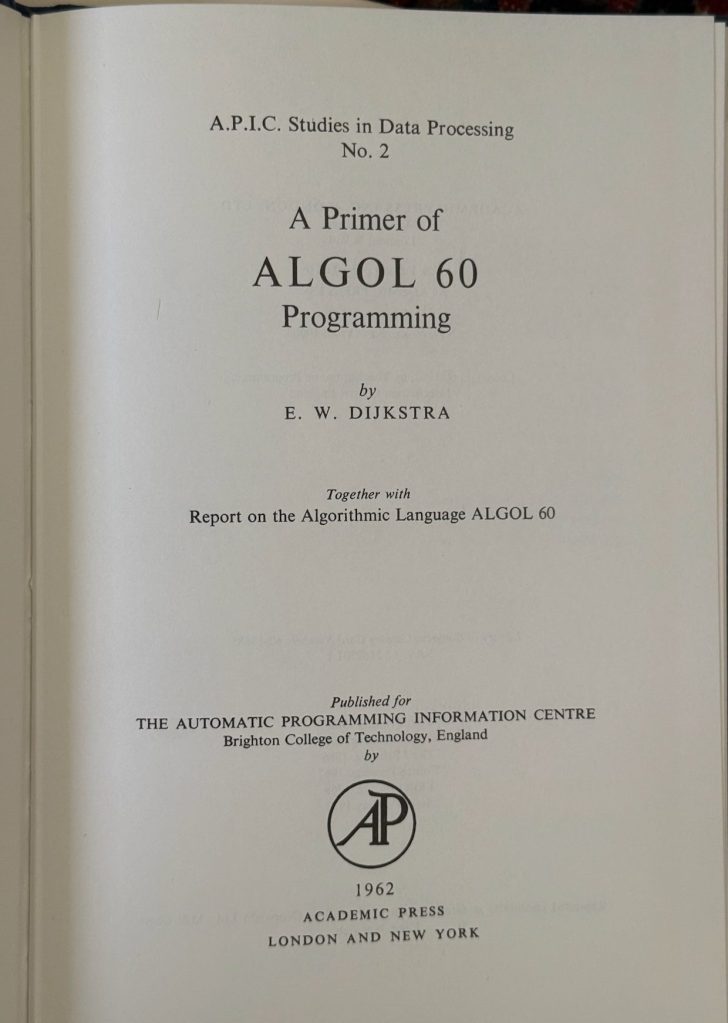
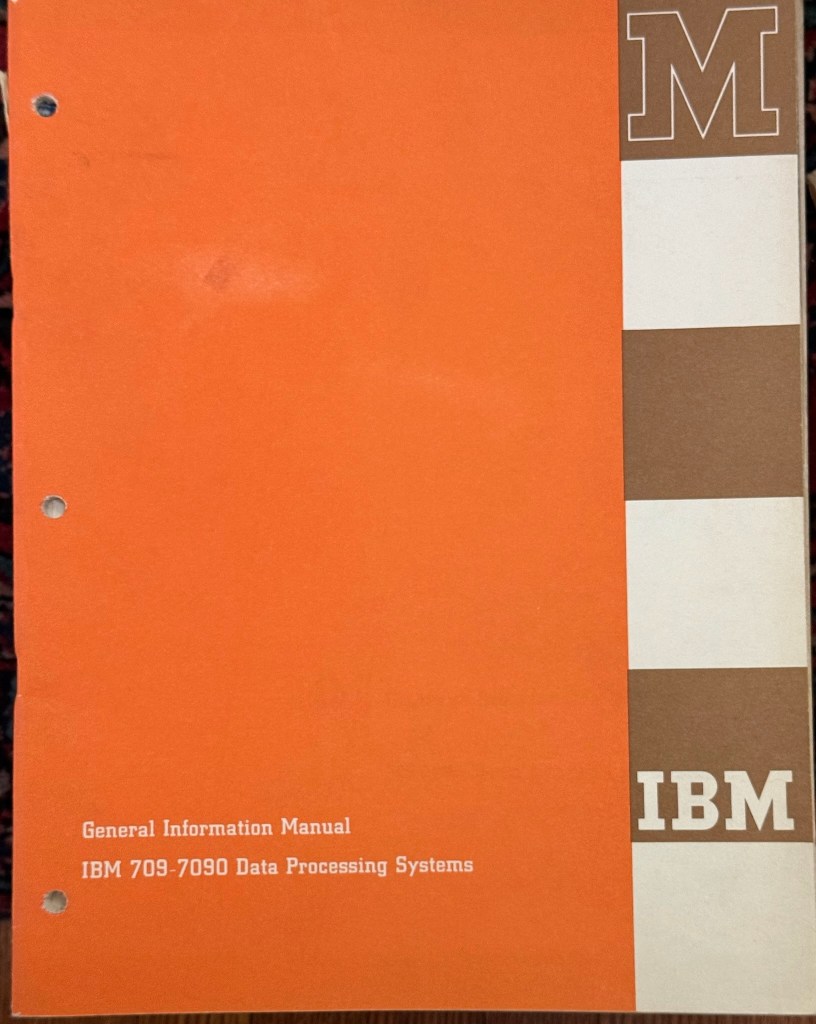
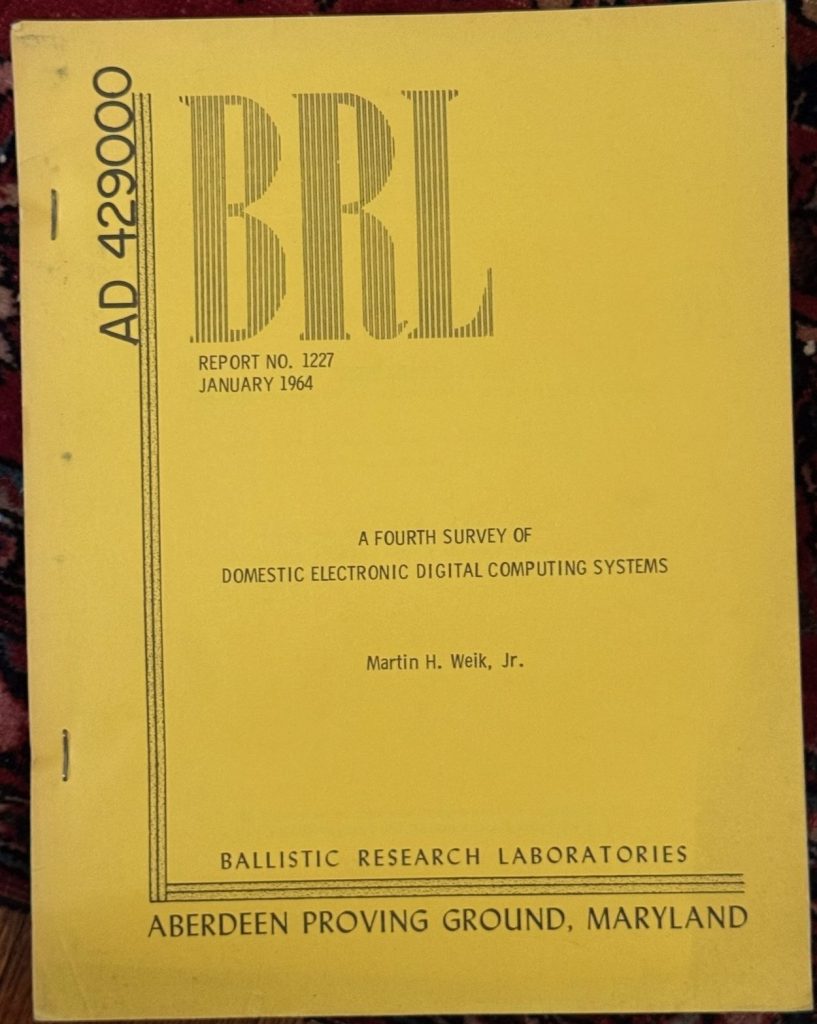
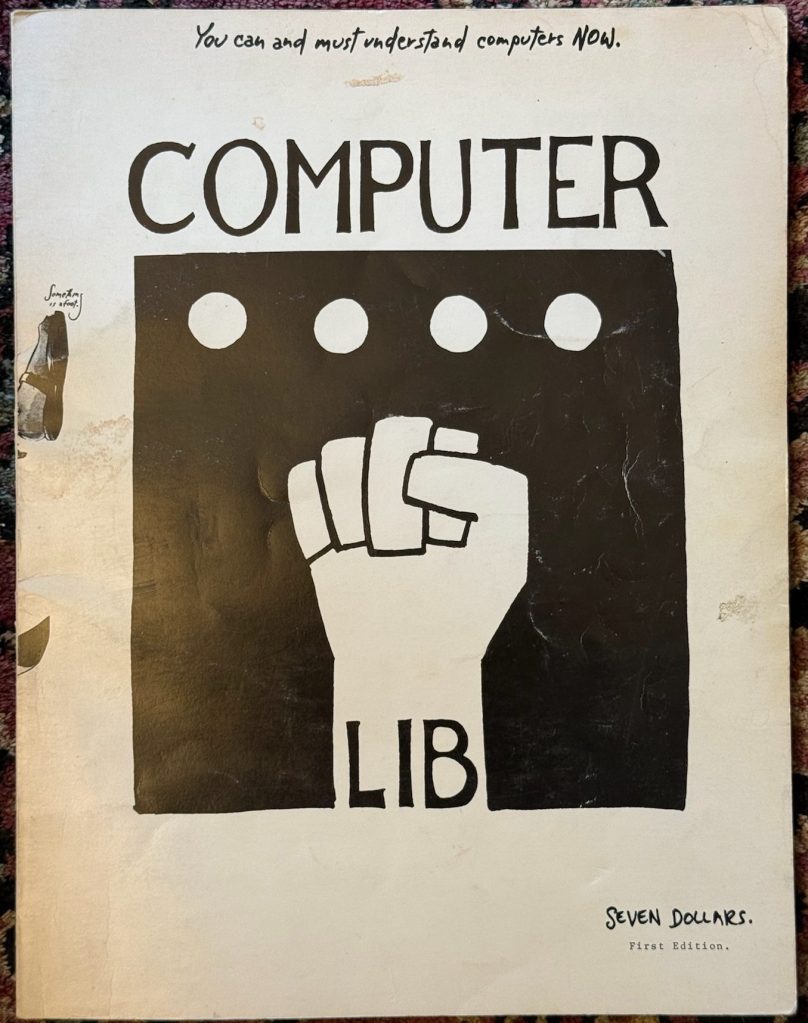
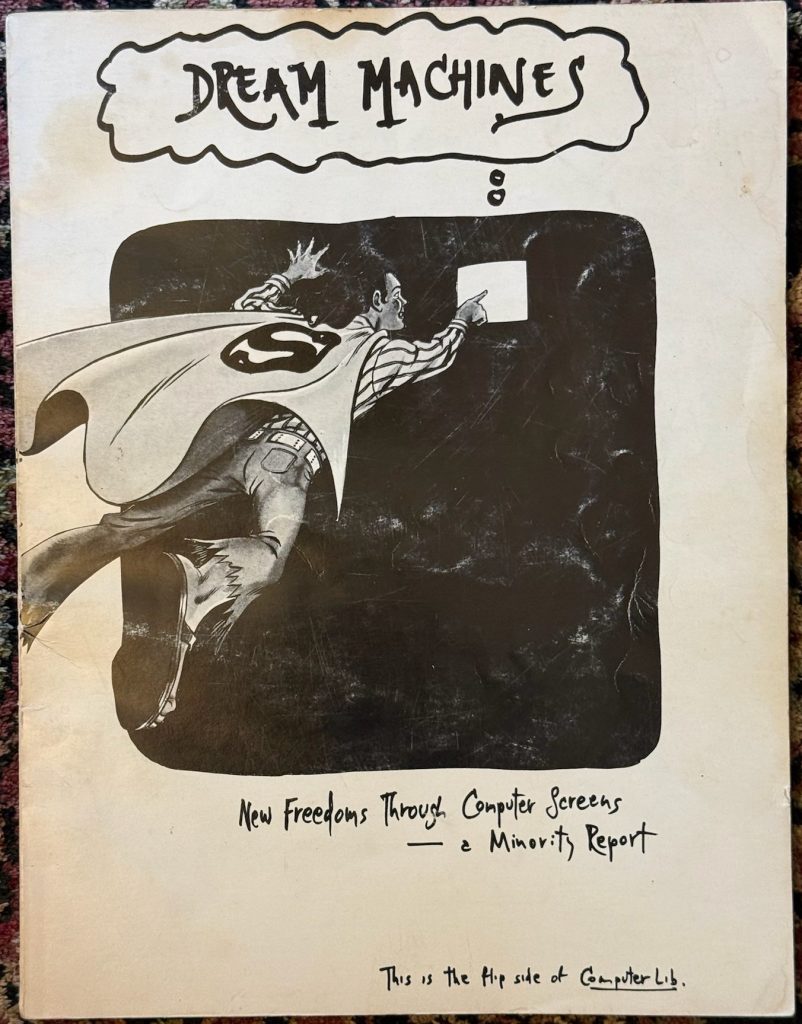
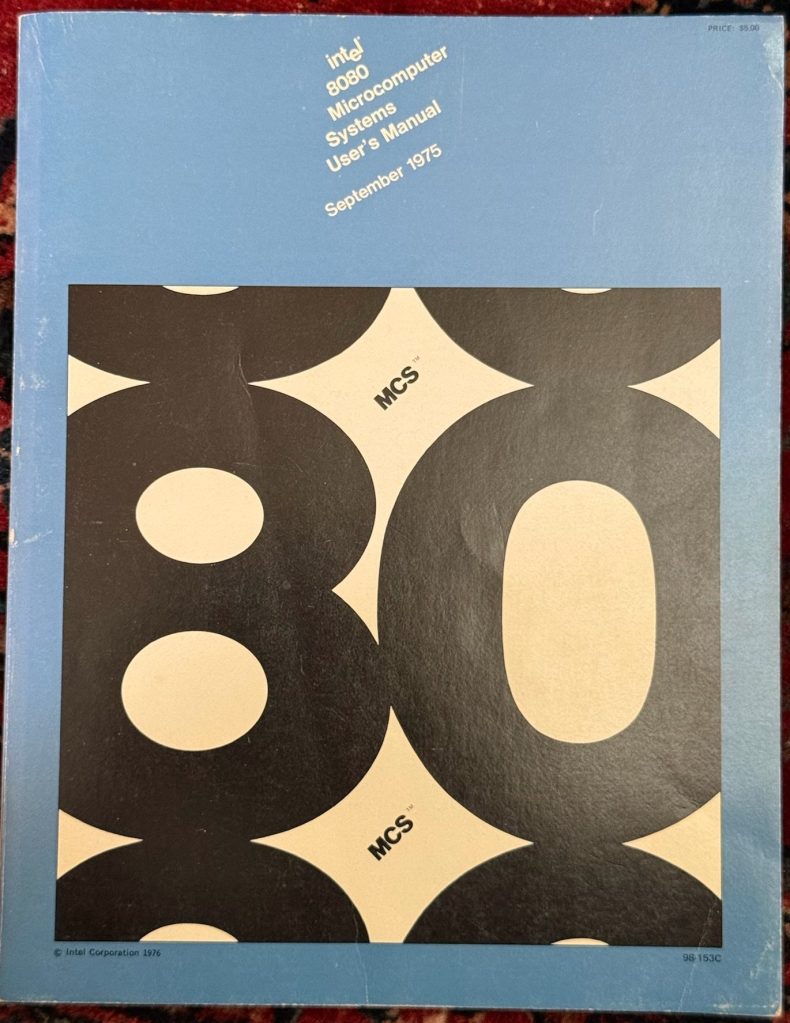
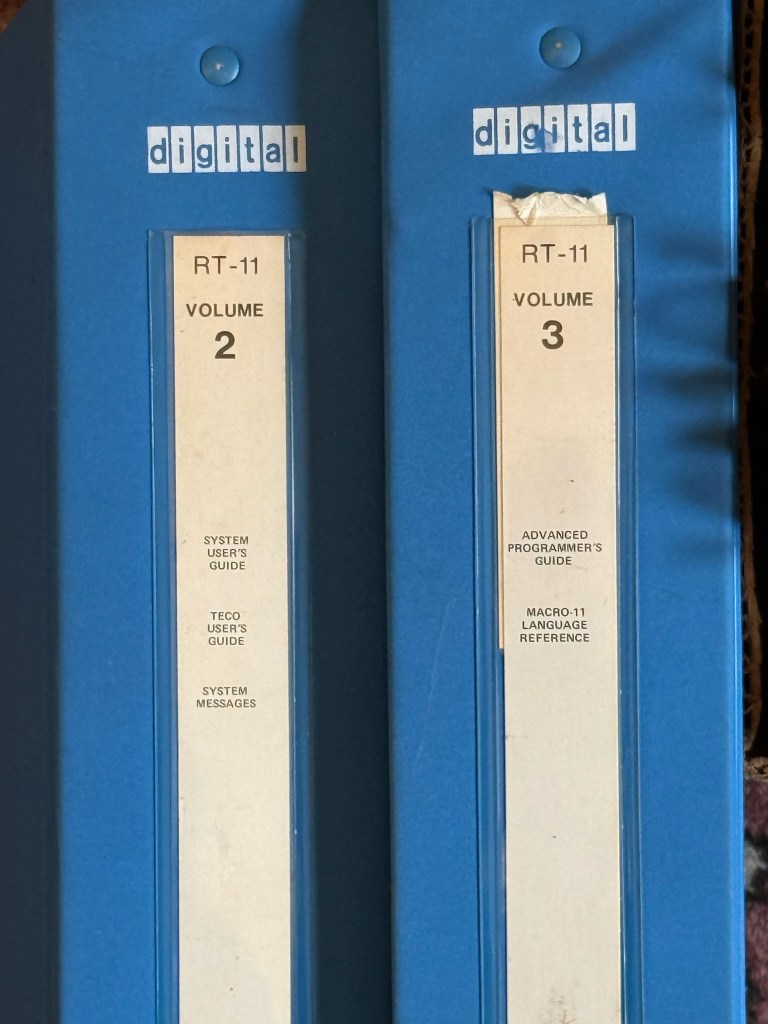
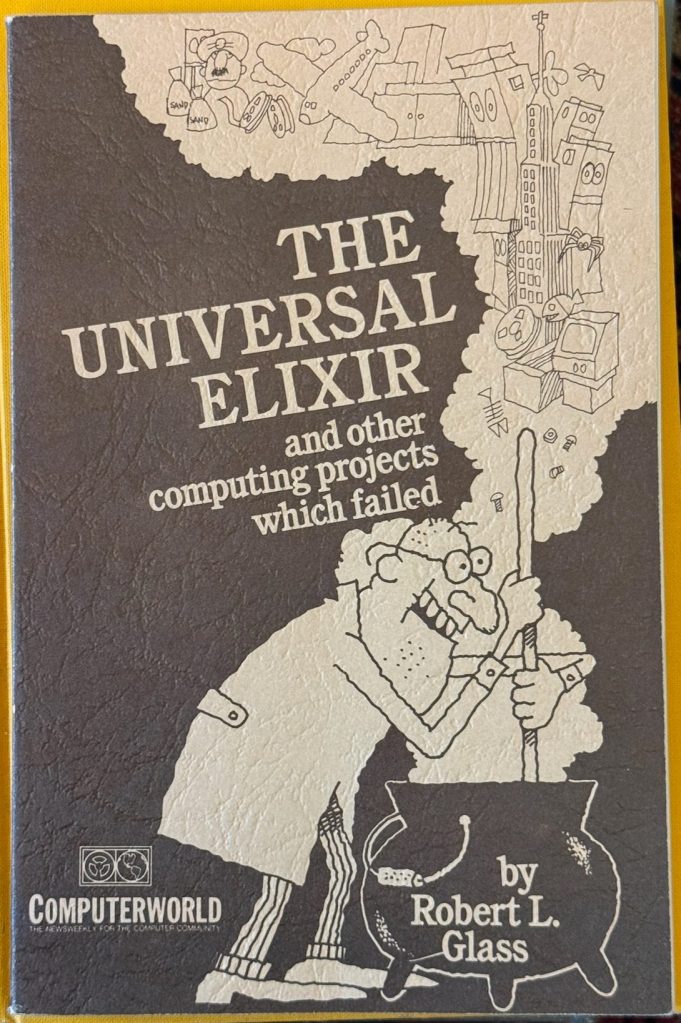
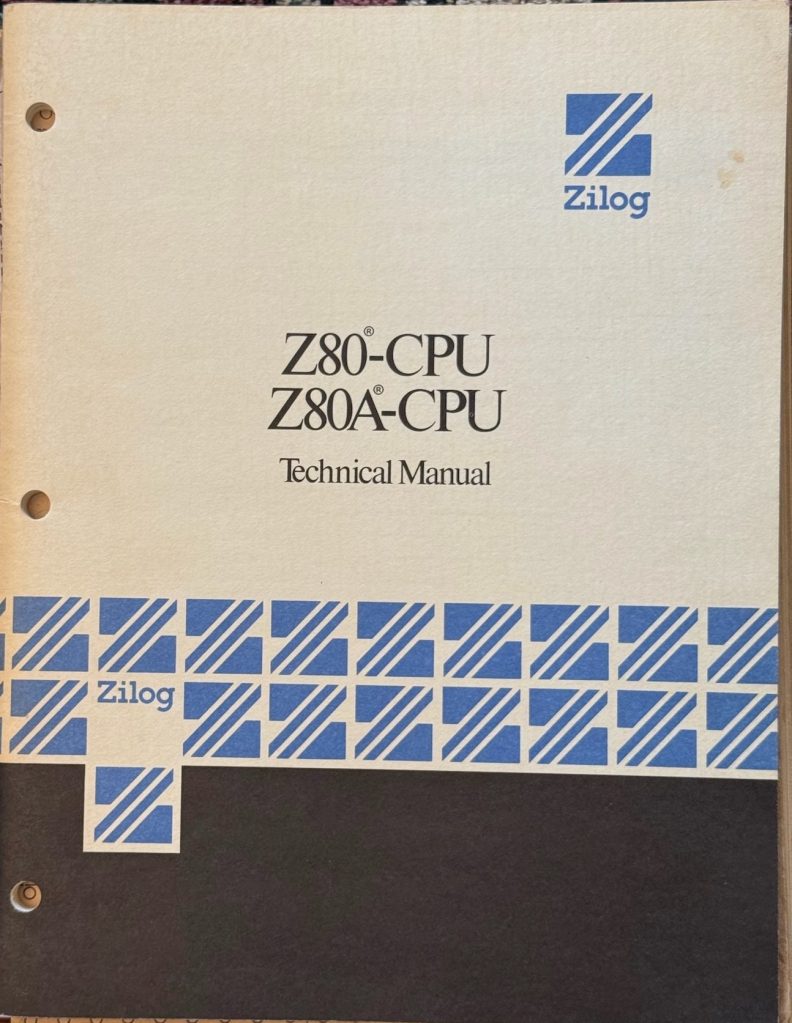
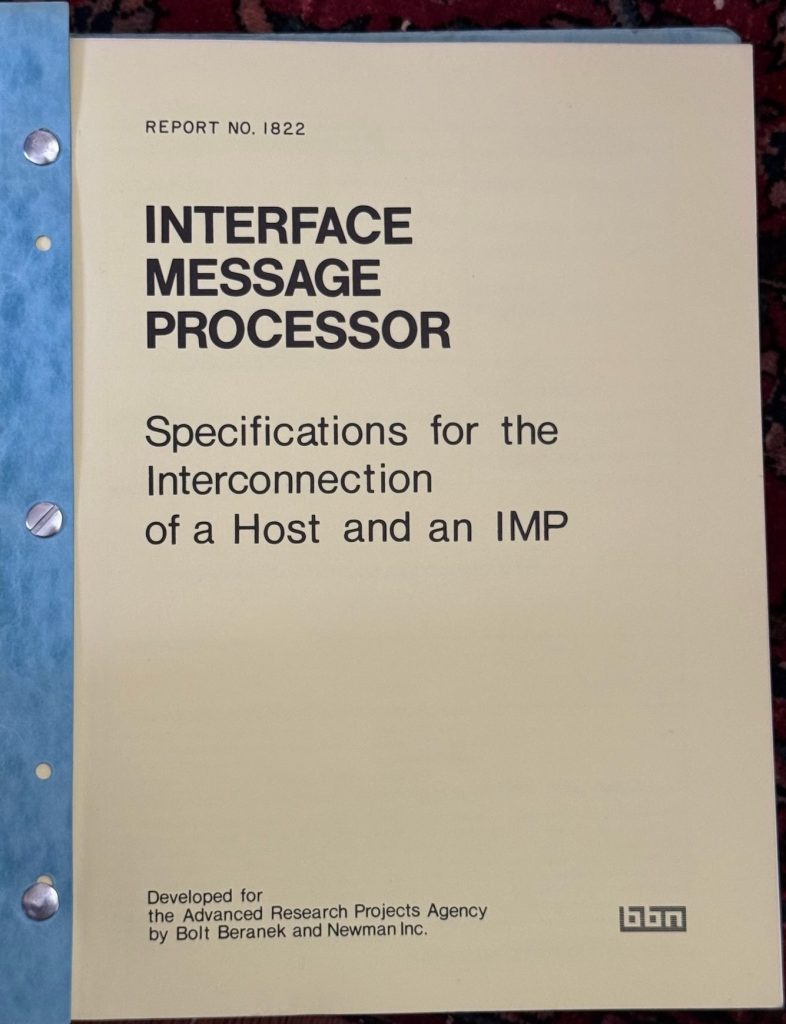
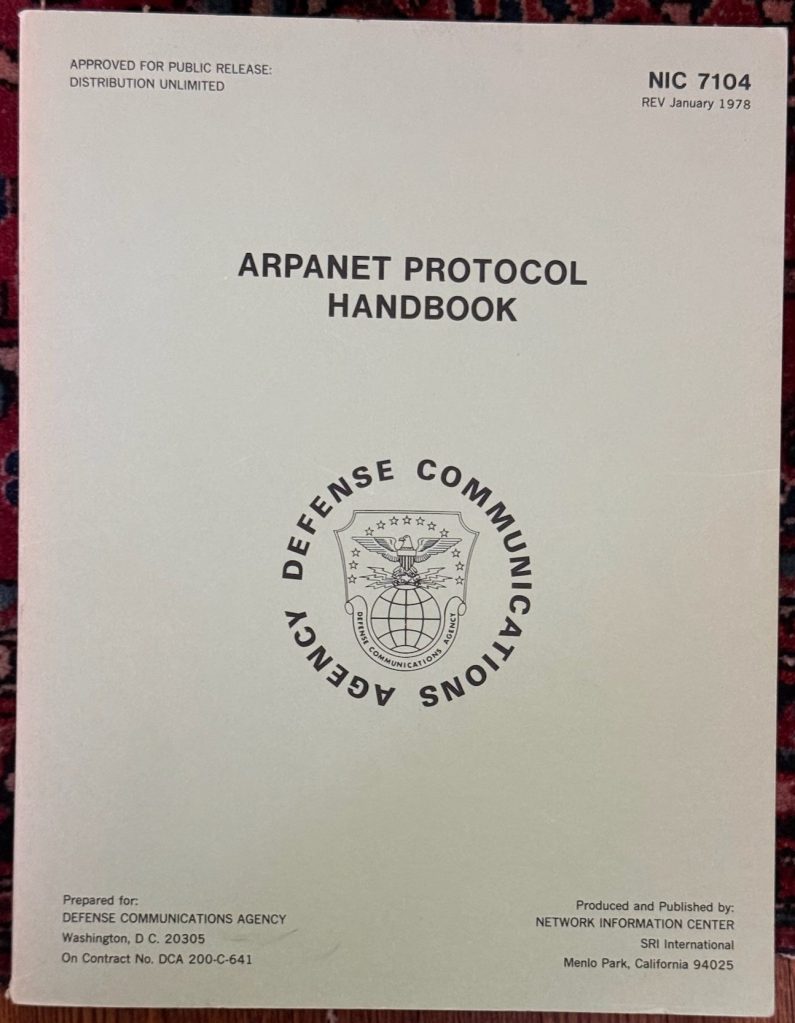
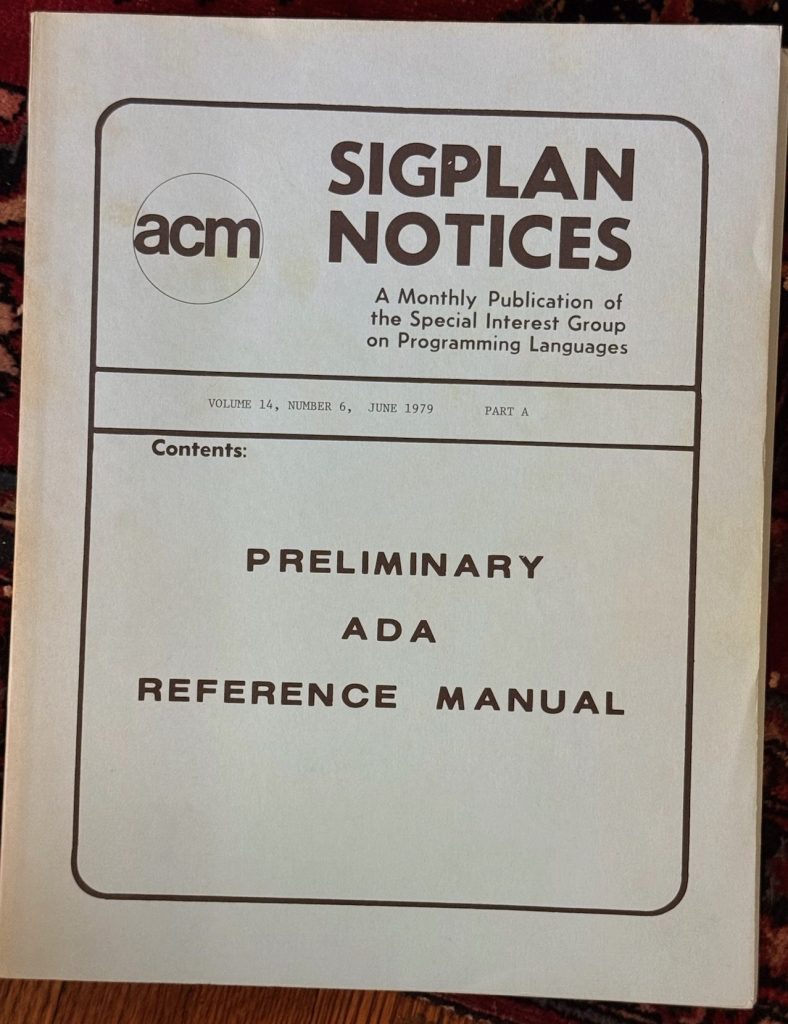
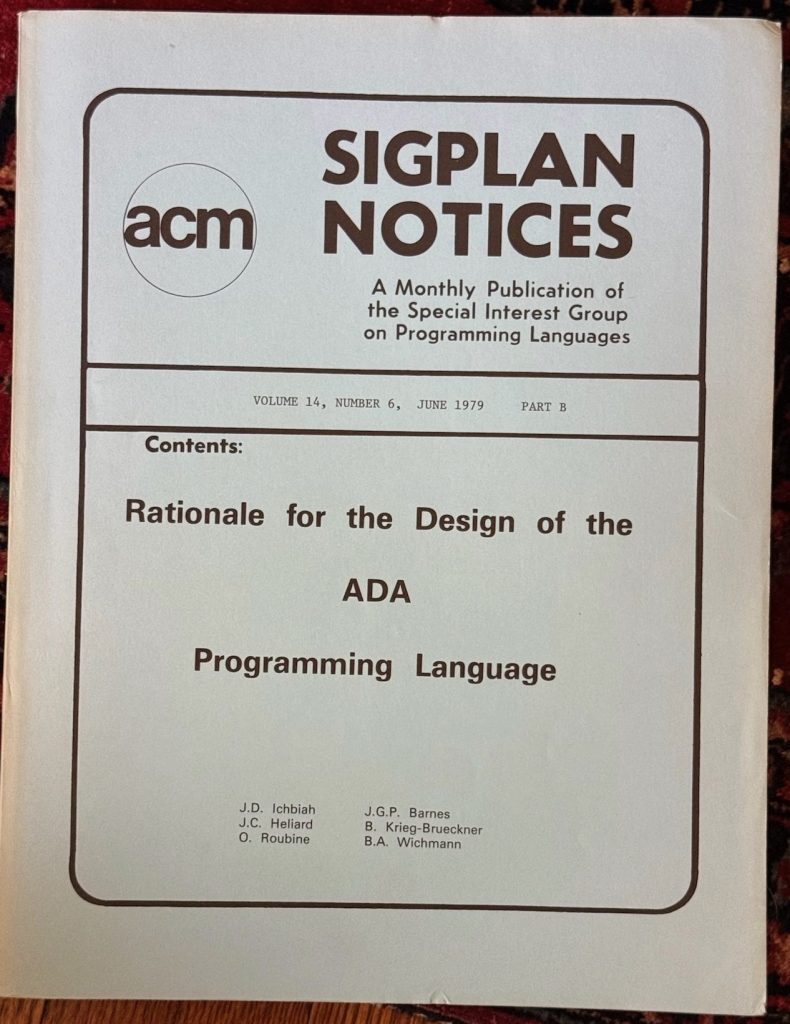
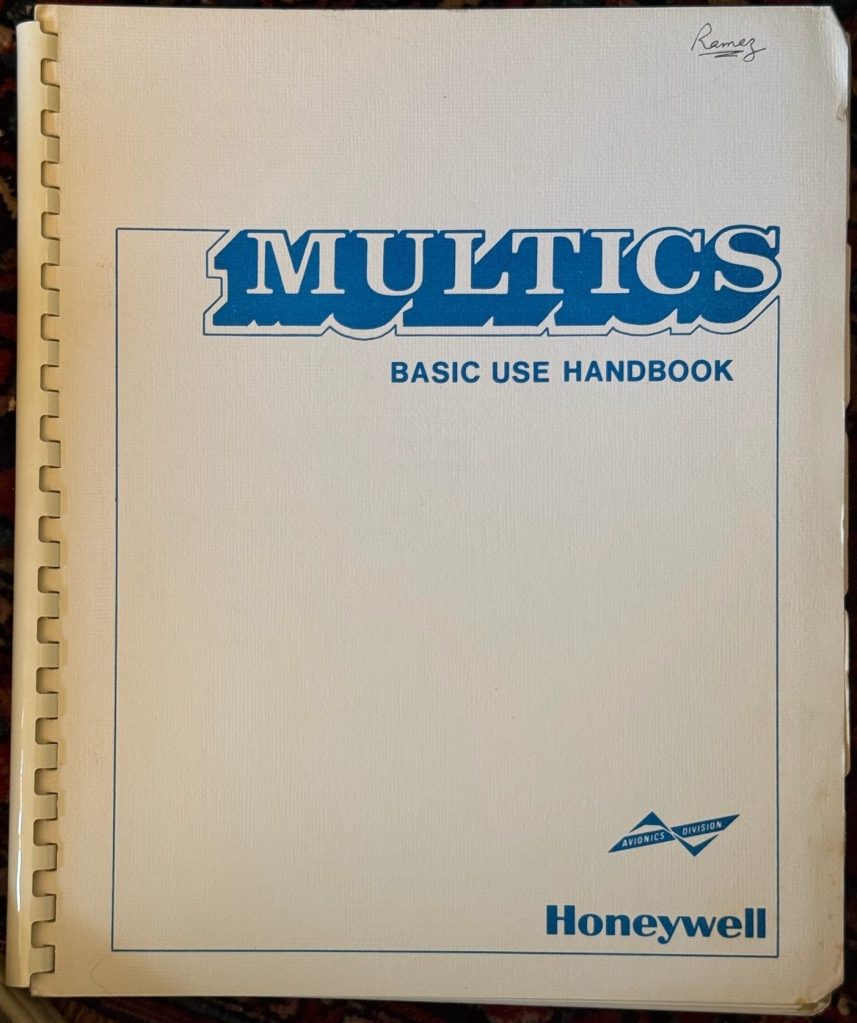
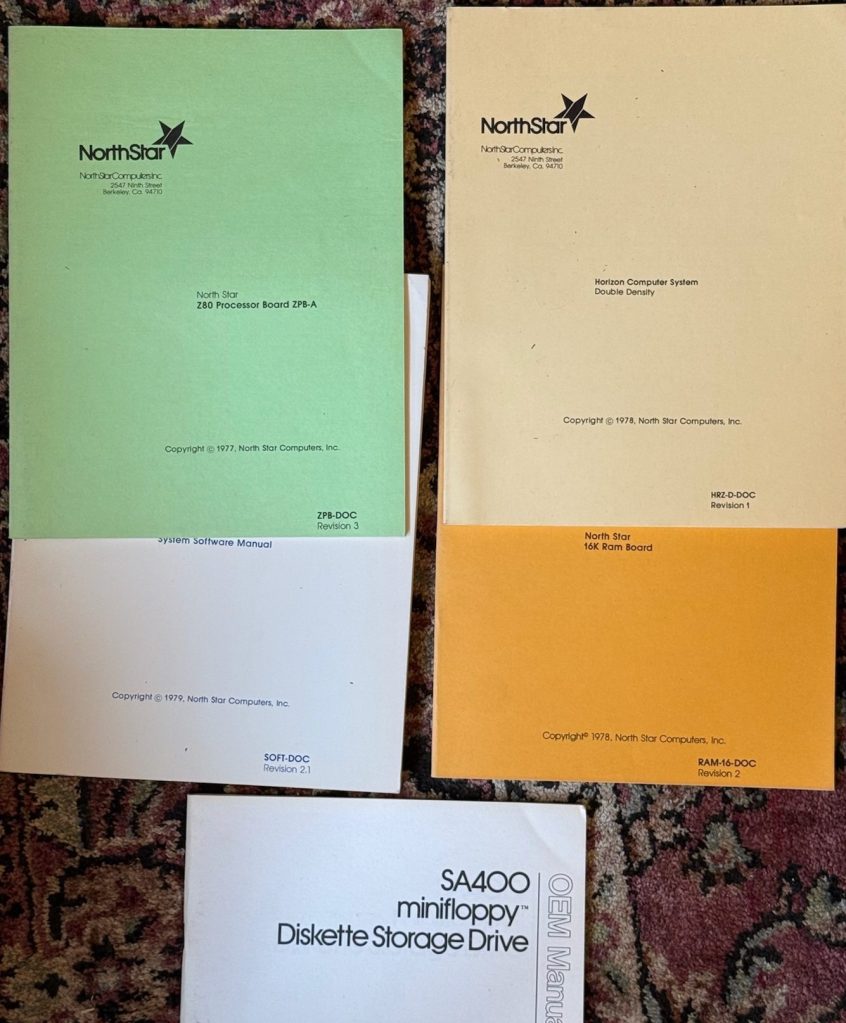
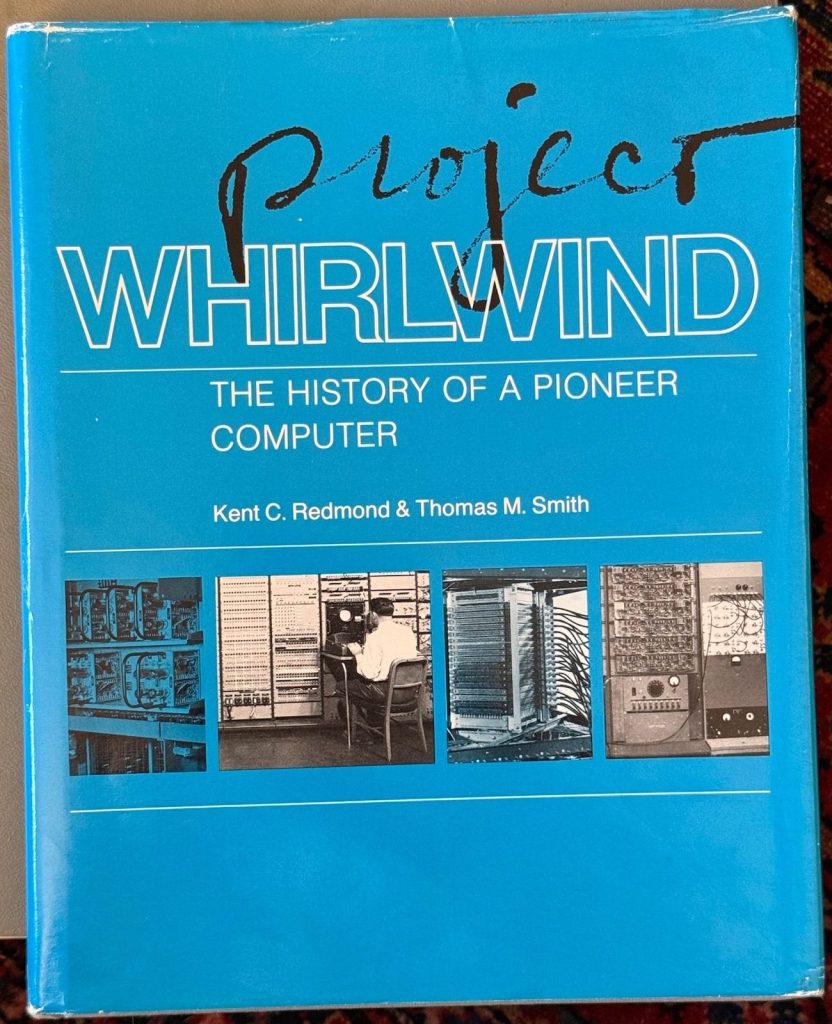
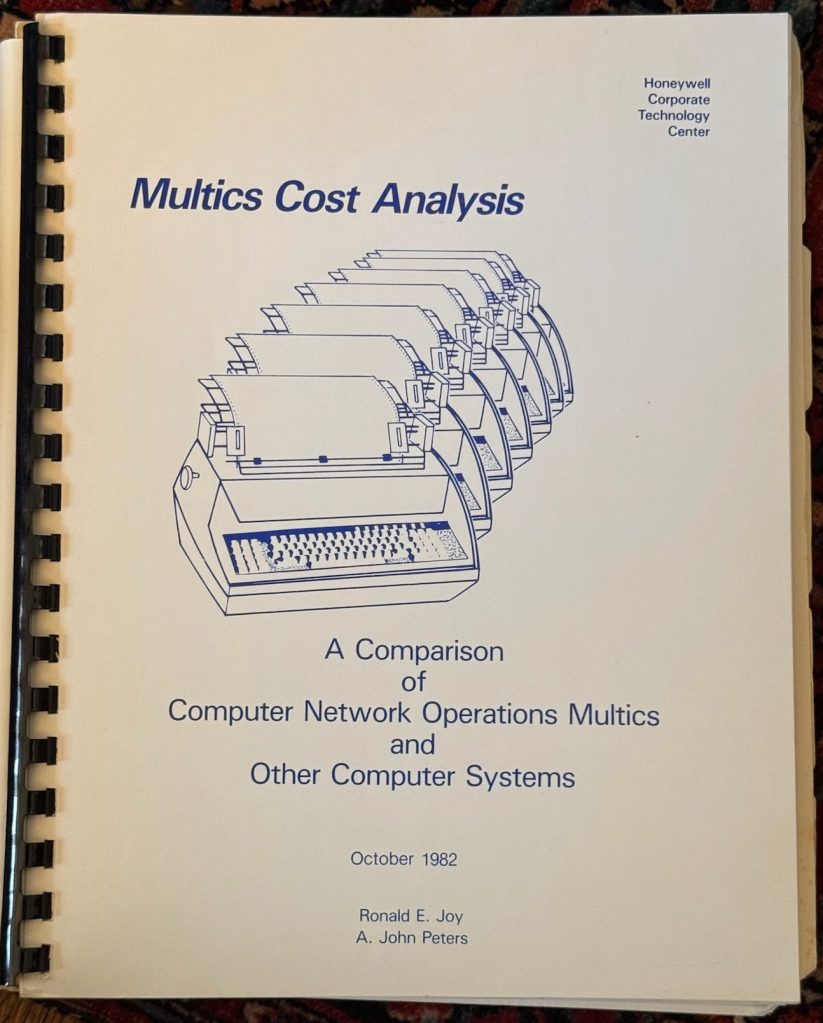
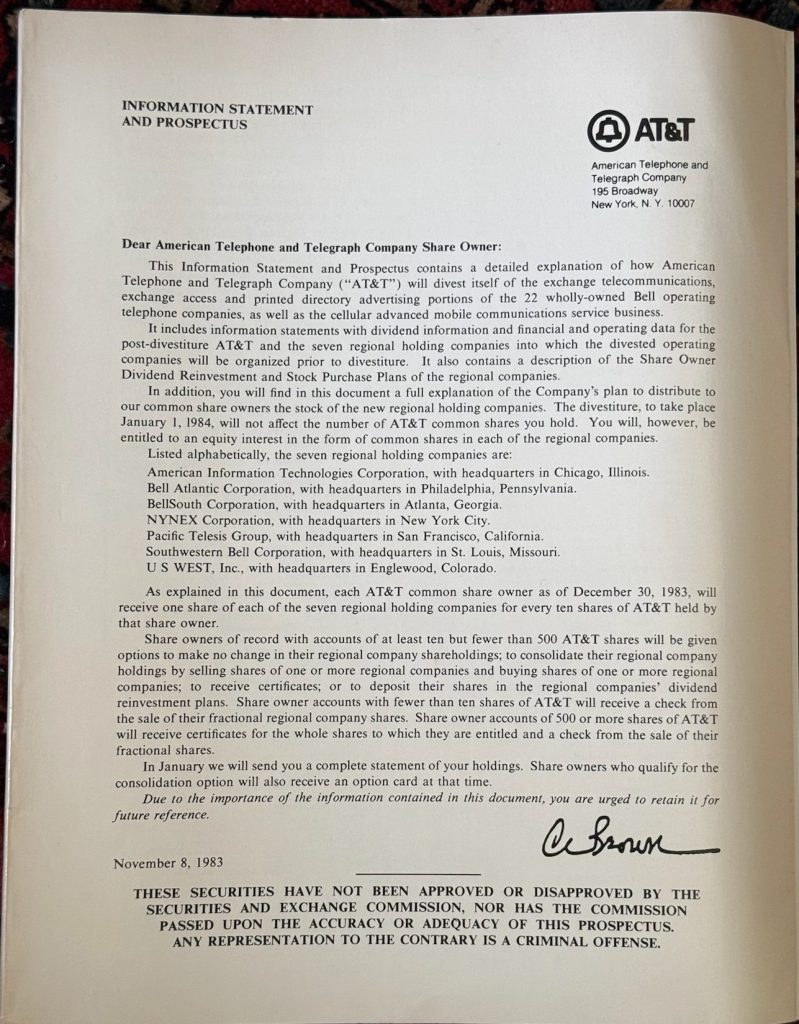
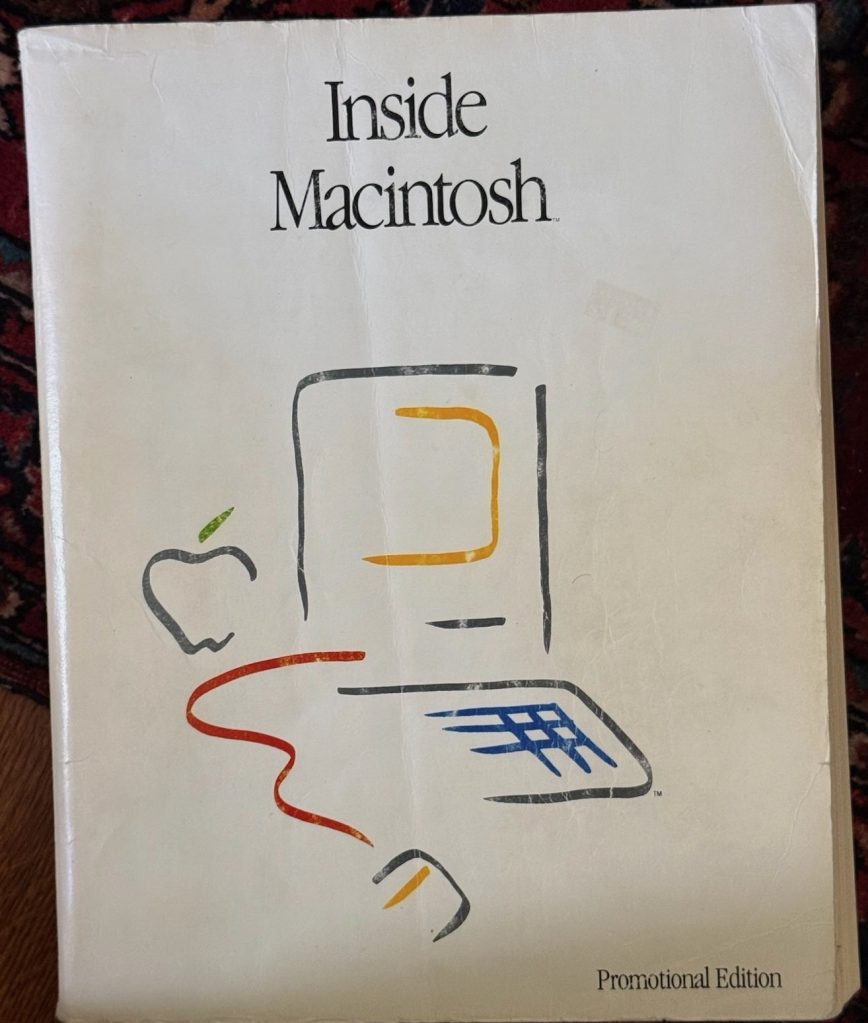
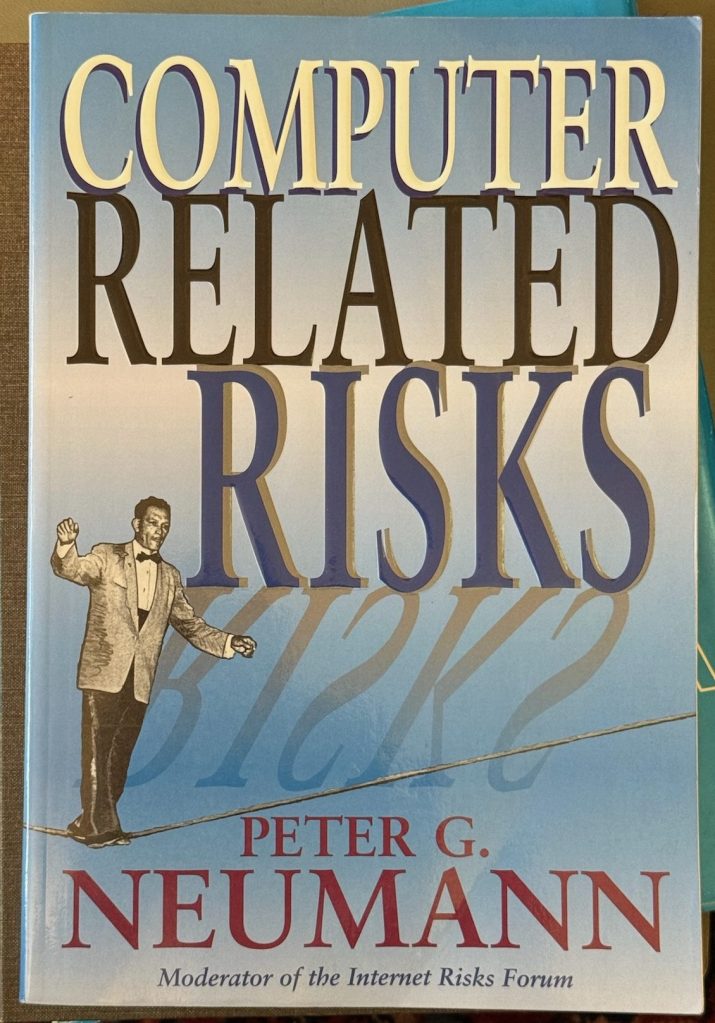
Click on an image to see a larger image. Captions contain links to explanations in the Glossary of possibly-unfamiliar concepts, terms, systems, and people.
I know a lot about computer systems and their history, but I still make mistakes. Some of the information is from memory and may contain errors. If you see something that doesn’t seem correct, please contact me.
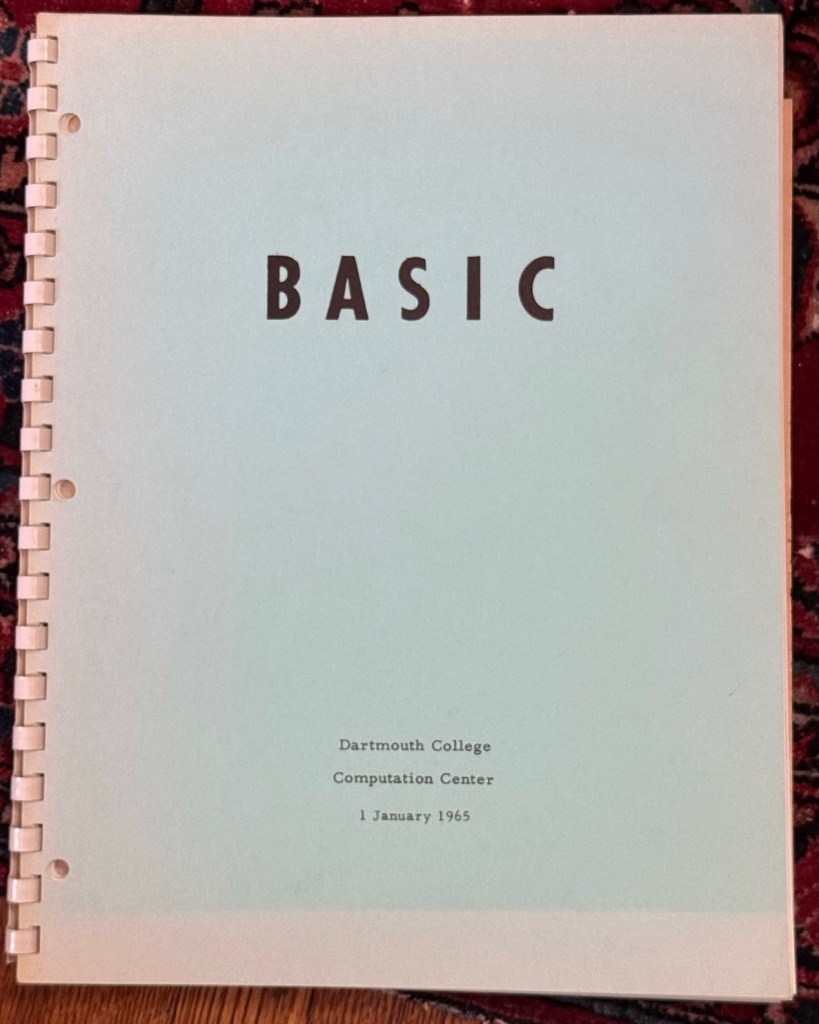
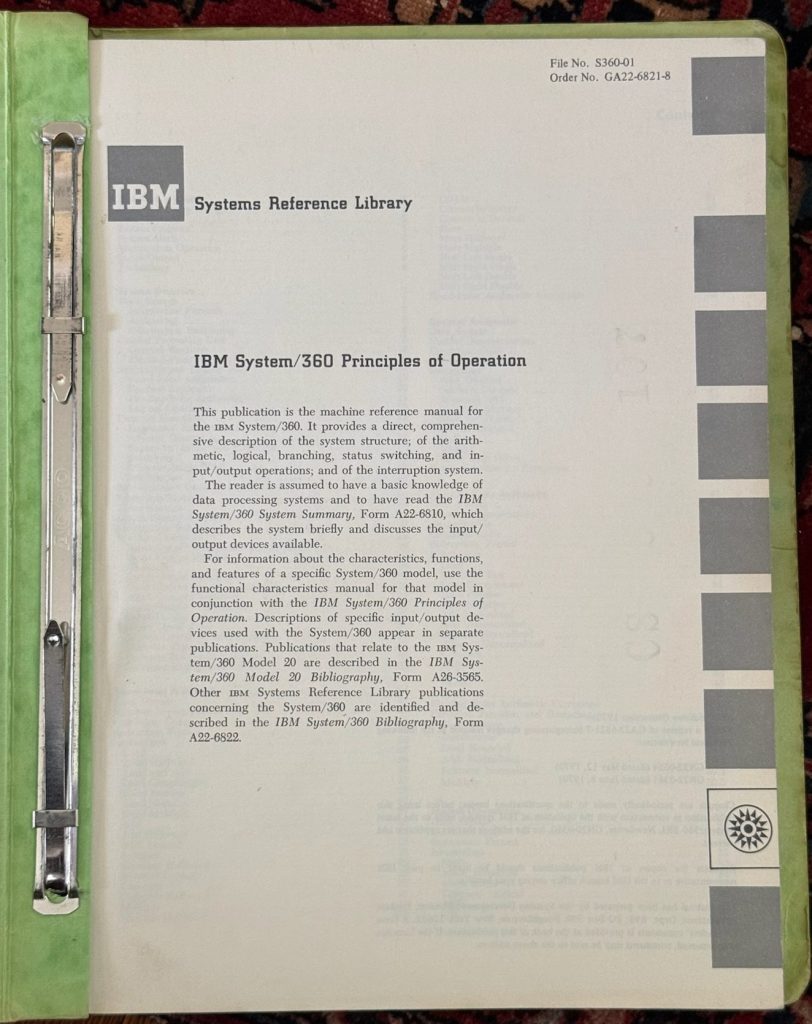
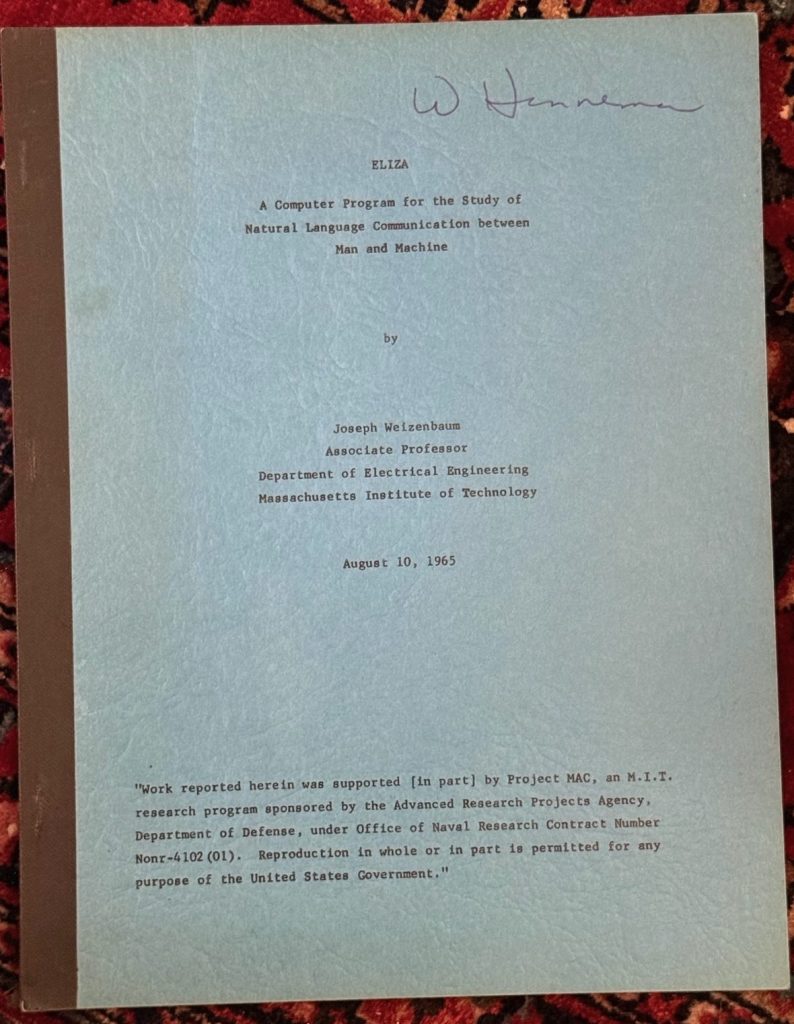
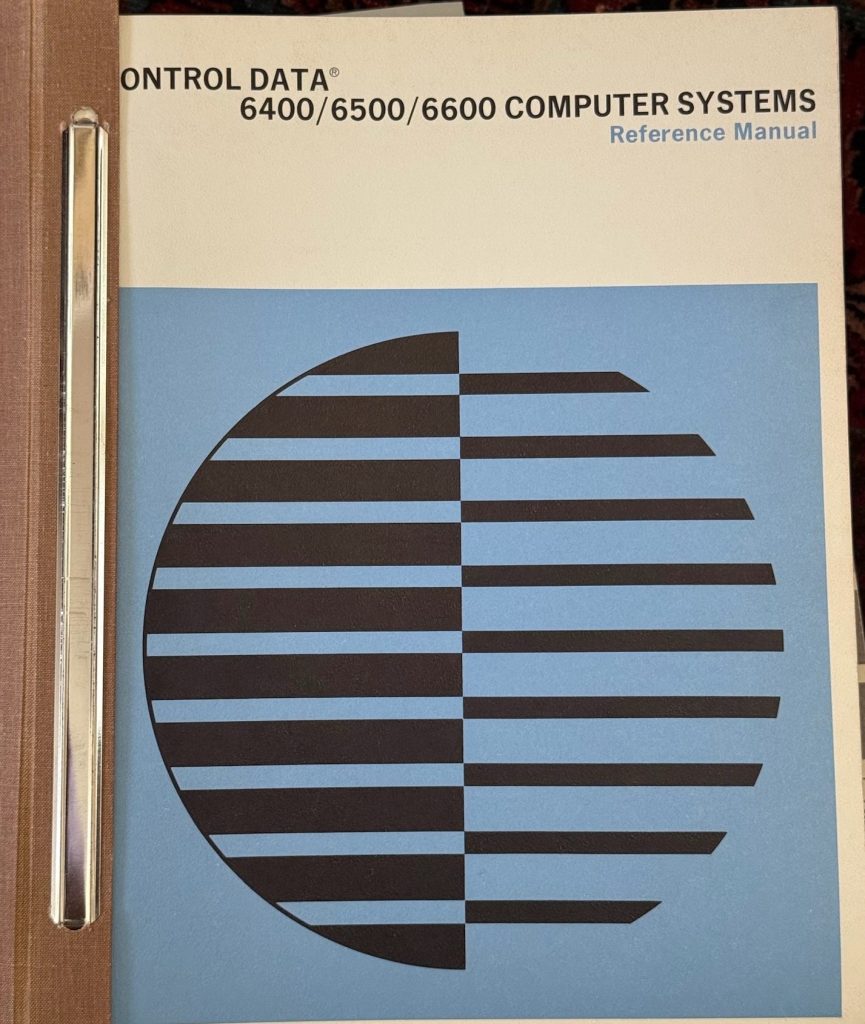
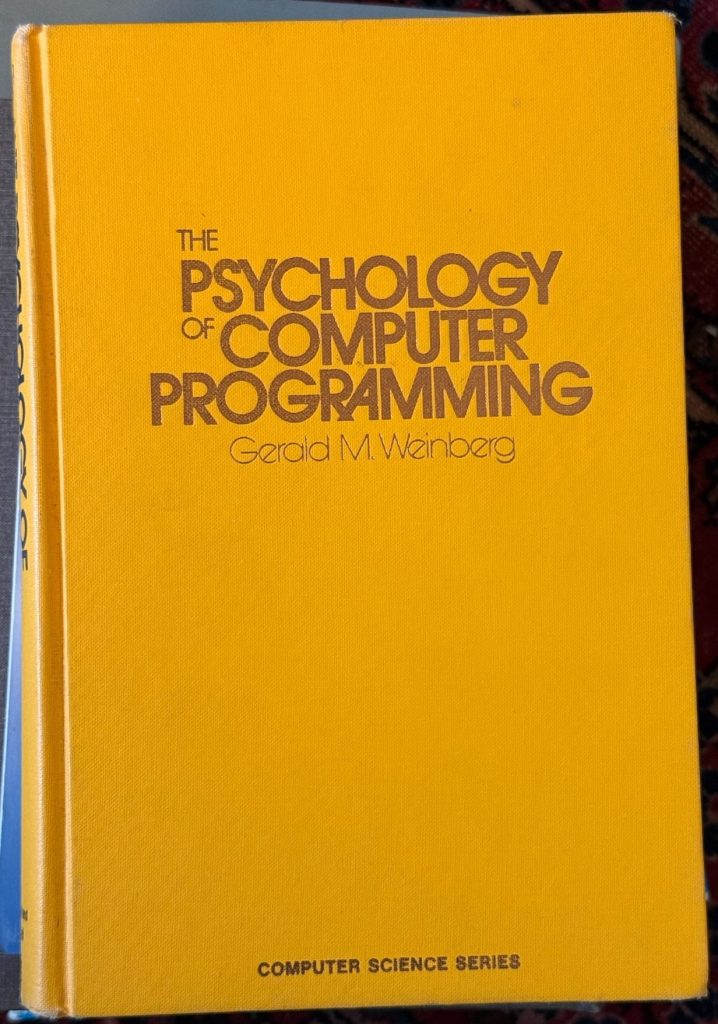
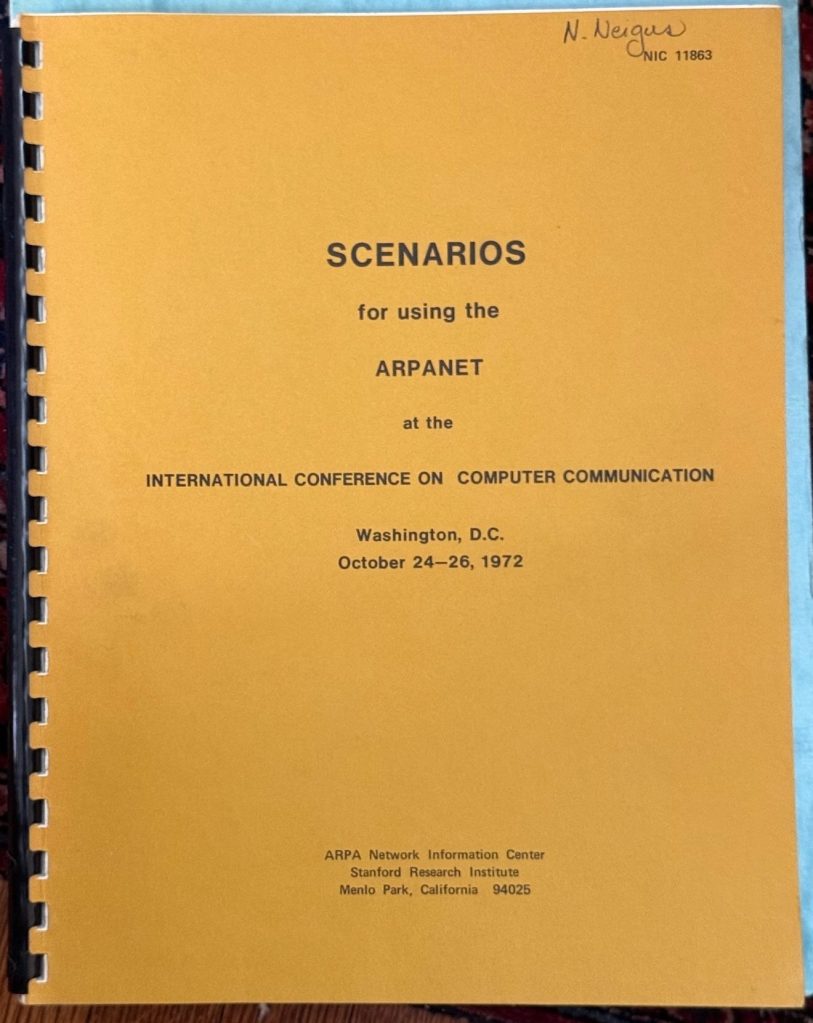
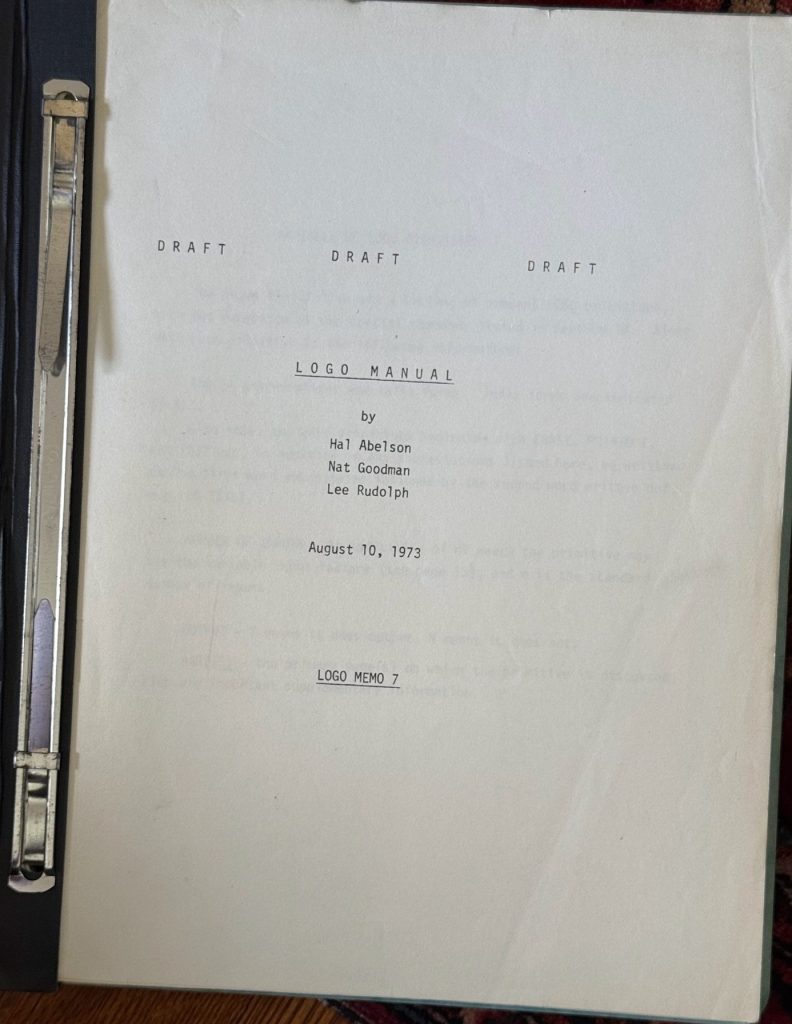
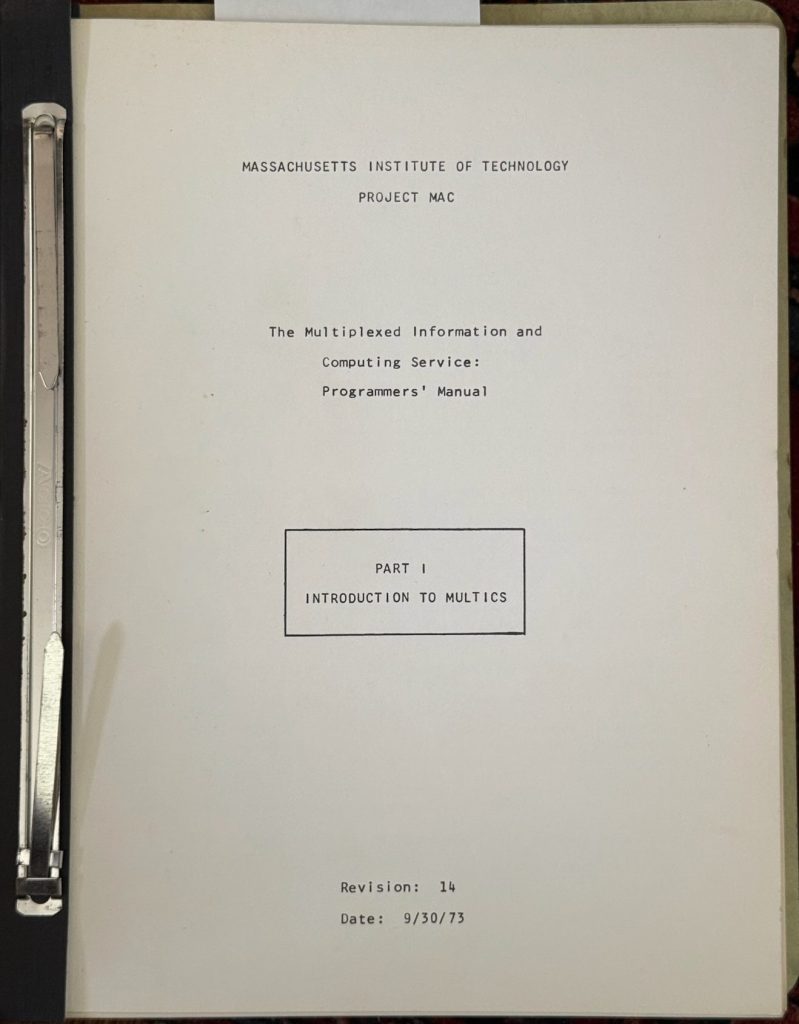
Glossary
Here are computing terms and concepts that may not be familiar to modern computing experts.
- ADA: A programming language designed by the US Department of Defense for safety and security critical applications. It was deployed in 1980.
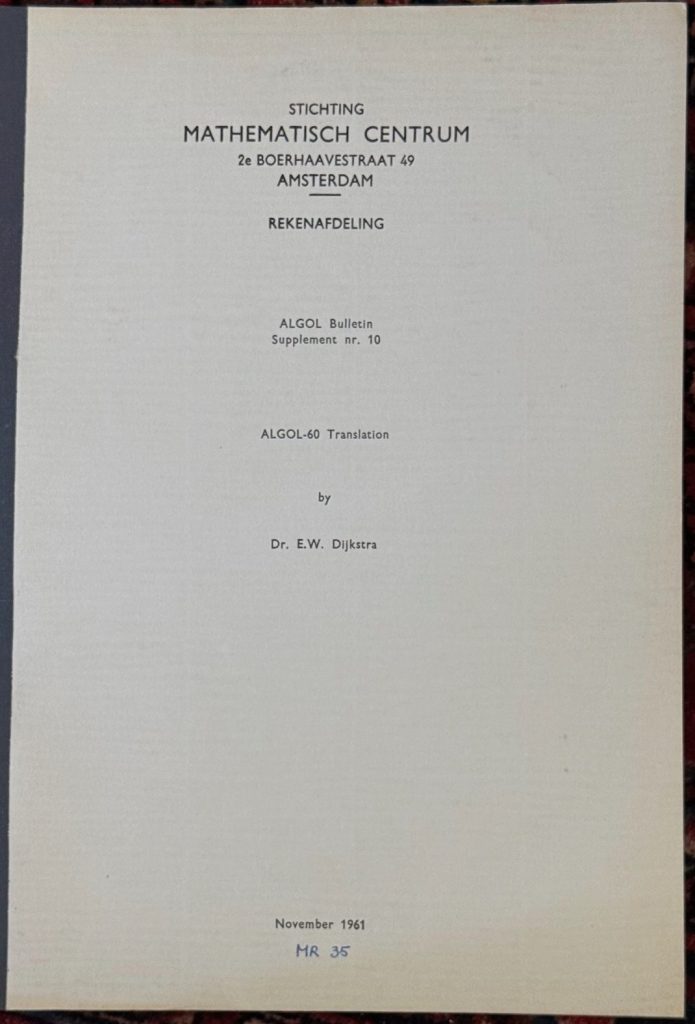
- ALGOL: An early programming language that made it easier to write mathematical equations for computation by machine. FORTRAN is a better-known language of that time.
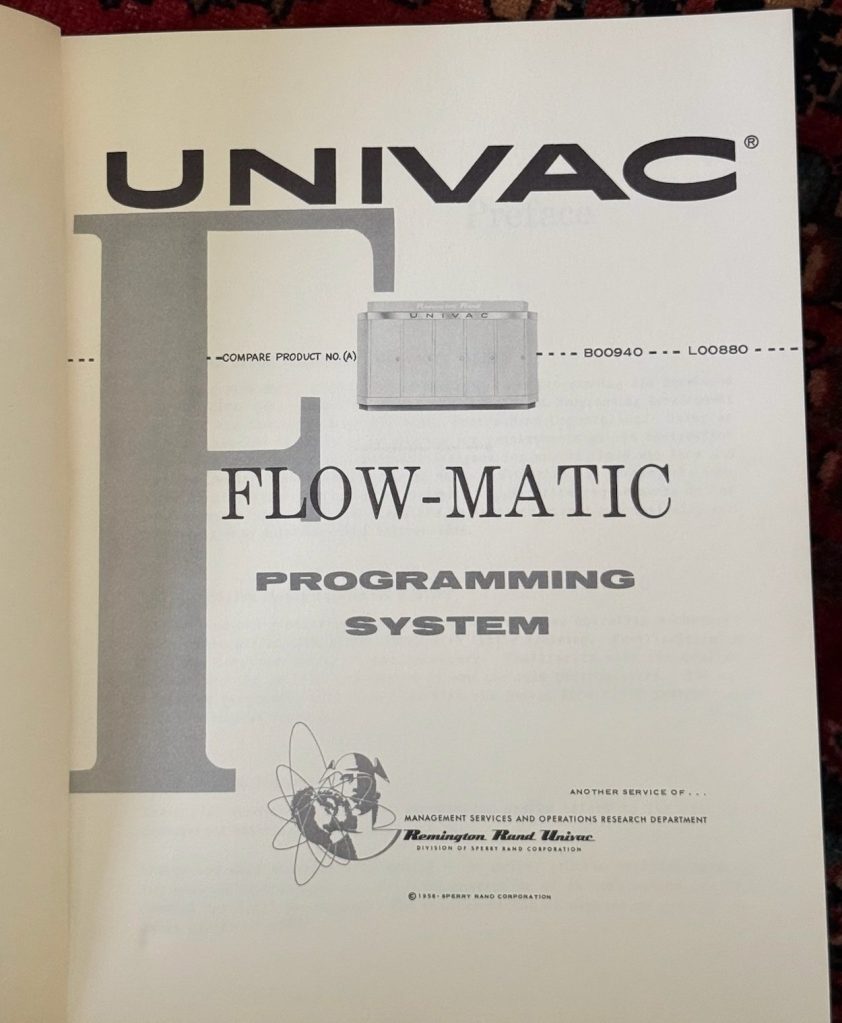
- Automatic Programming: computer software that takes an easier-to-write description of a computing problem and then solves the problem. Sometimes this uses a compiler.
- Central Processing Unit (CPU): The circuitry in a computer that interprets programs written using its instruction set. When the computer is told to execute a program, the CPU always interprets the program as if it were written using its instruction set.
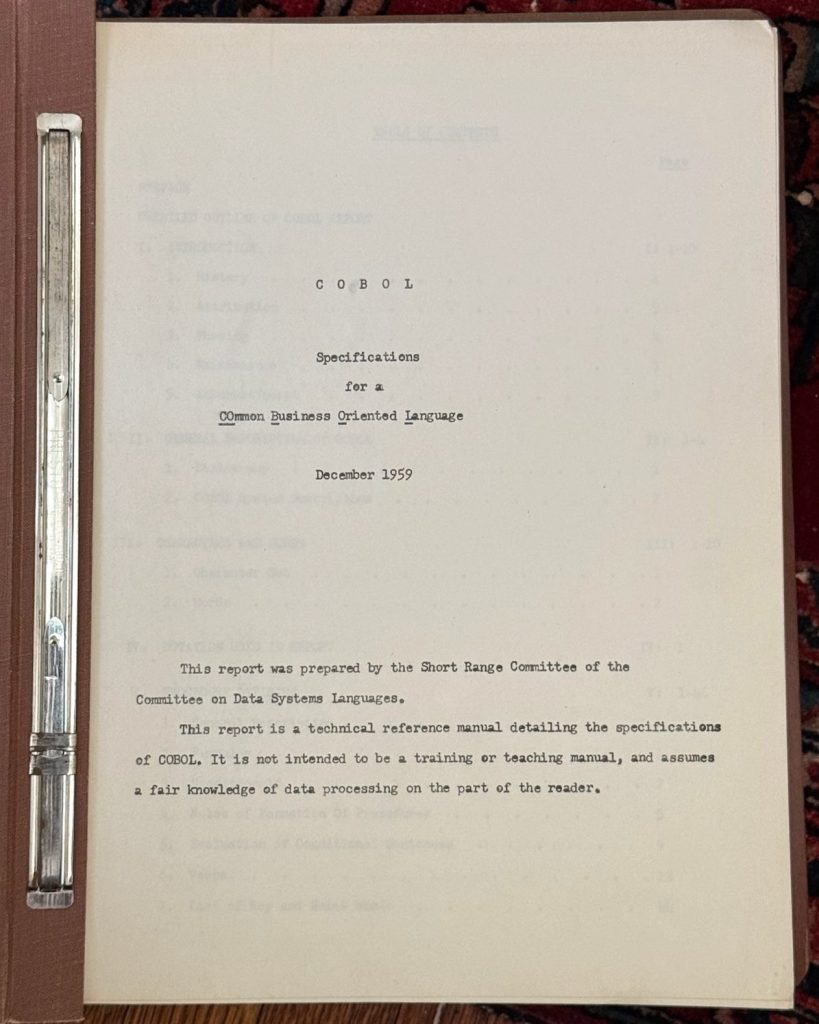
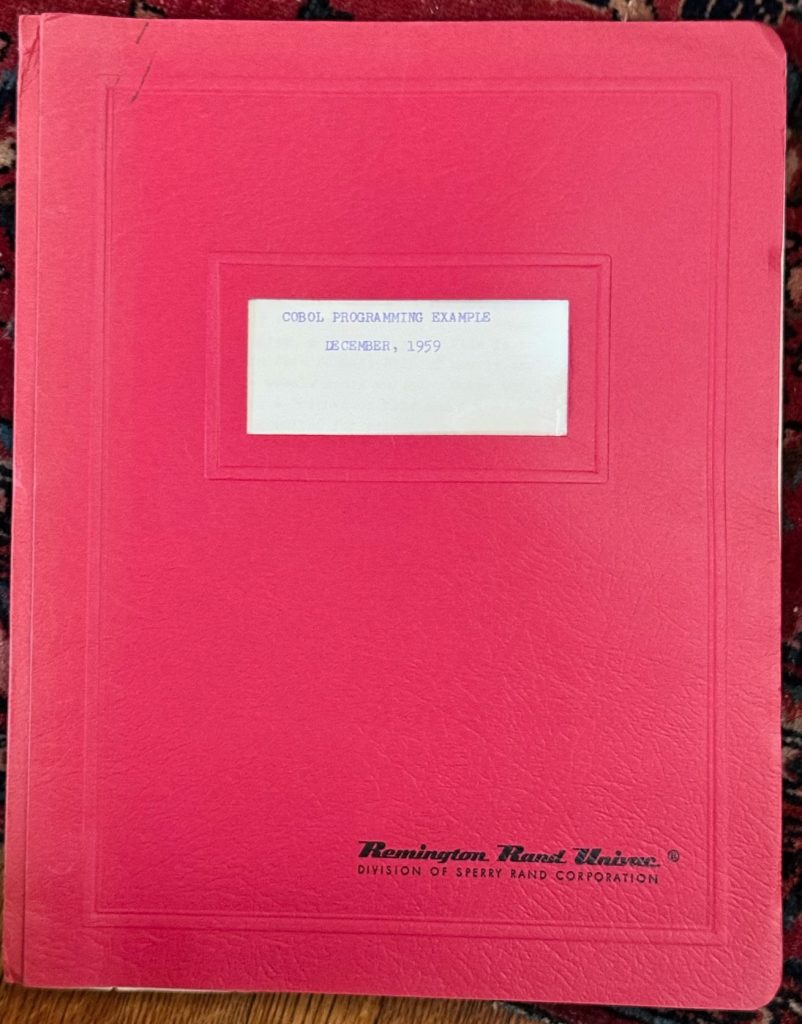
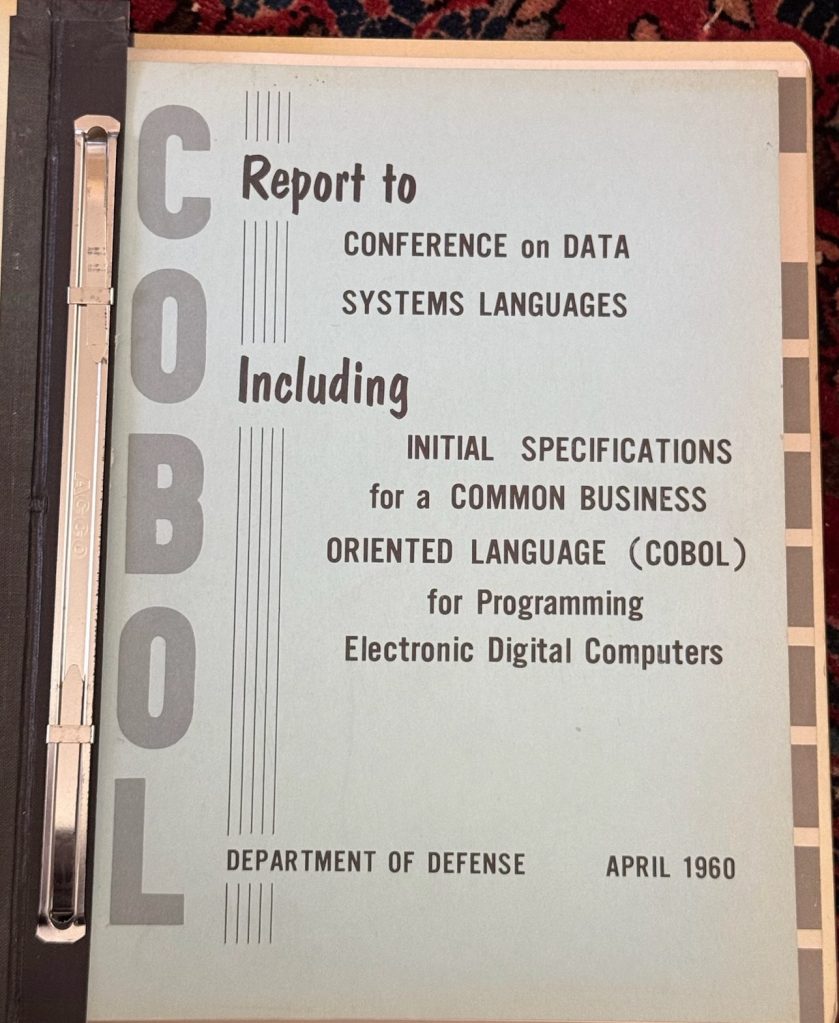
- COBOL: an early programming language intended to solve business automation problems. Introduced in 1960, it is often attributed to Grace Hopper, who organized a design committee of three separate “task forces:” the short range, intermediate range, and long range. Hopper chaired the short range committee and her committee’s recommendation prevailed.
- Compiler (n), compiling (v): A compiler takes a computing problem that has been accurately described in a programming language and converts it into a series of instructions that conforms to the instruction set of a particular type of computer.
- Computer Language: When we speak of a “language” in the context of a computer, it is generally a rigidly-defined textual language used to tell the computer what to do.
- Digital computers: Modern computers are digital computers: all information is represented as discrete quantities. These are an alternative to analog computers, which include slide rules and differential analyzers.
- E. W. Dijkstra (1930-2002): A prominent expert in computer programming, particularly programming languages. His short article “GOTO Statement Considered Harmful” helped promote programming languages to support “structured programming” as a way to improve software reliability. A friend of mine published a note on programming languages in the 1980s and considered it a worthwhile contribution after it produced a negative response from Dijkstra.
- Electronic computers: Modern computers are electronic computers in that they are built with electronic components. Older calculators used gear mechanisms to calculate, and several early computers used electromagnetic relays. The earliest electronic computers were built of vacuum tubes while later models were built with transistors or integrated circuits.
- Grace Hopper (1906-1992): A prominent pioneer in software development. As a naval officer during and after World War II, she worked at Harvard on relay calculators. In 1949 she started working on the early commercial Univac computers and pioneered early compilers. She was a key player in the development of COBOL.
- Instruction set: A precisely defined set of numerical codes that are recognized by a computer’s CPU. Typical instructions perform arithmetic operations like add or subtract and additional instructions to retrieve and output data. Programs written for a particular computer must be coded using its instruction set.
- Interactive Computing: These systems were designed to directly interact with individual users, initially using text-only teletype terminals. Early systems used large “mainframe” computers to provide the computing power to rapidly respond to user requests. Microcomputers made it practical for a single person to use a single computer.
- Mainframe computer: These were large-scale computers that were expensive to operate. Businesses and schools tried to keep them busy at all times to make the high cost worthwhile. Almost every computer built in the 1940s and 1950s was considered a mainframe.
- Microcomputer: A computer that uses a microprocessor as its CPU. Early personal computers were microcomputers.
- Microprocessor: A CPU implemented on a single integrated circuit chip. The Intel 4004, introduced in 1971, was one of the earliest examples, if not the earliest.
- Minicomputer: A lower-cost computer that used a simple design, often based on the Whirlwind. A low-cost mainframe computer system typically cost ten times as much as a minicomputer system.
- Multics: an early interactive computer system that supported numerous users on large mainframe computers.
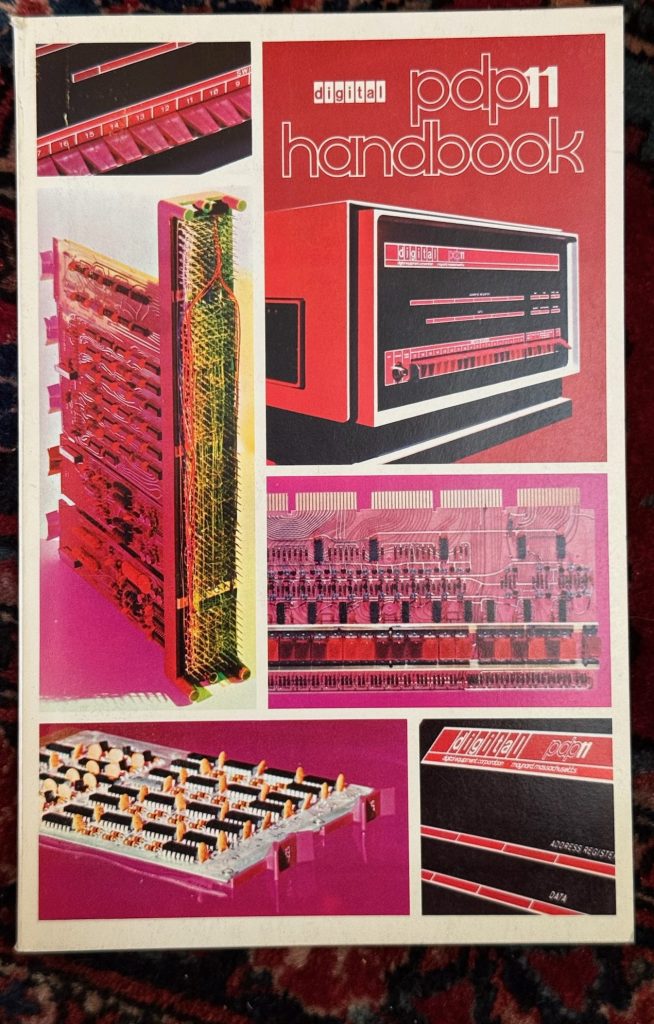
- PDP-11: A popular commercial minicomputer introduced in 1969. Produced by Digital Equipment Corporation (DEC), it was used for real time and software development tasks.
- Programming Language: A computer language intended for solving problems by writing computer programs.
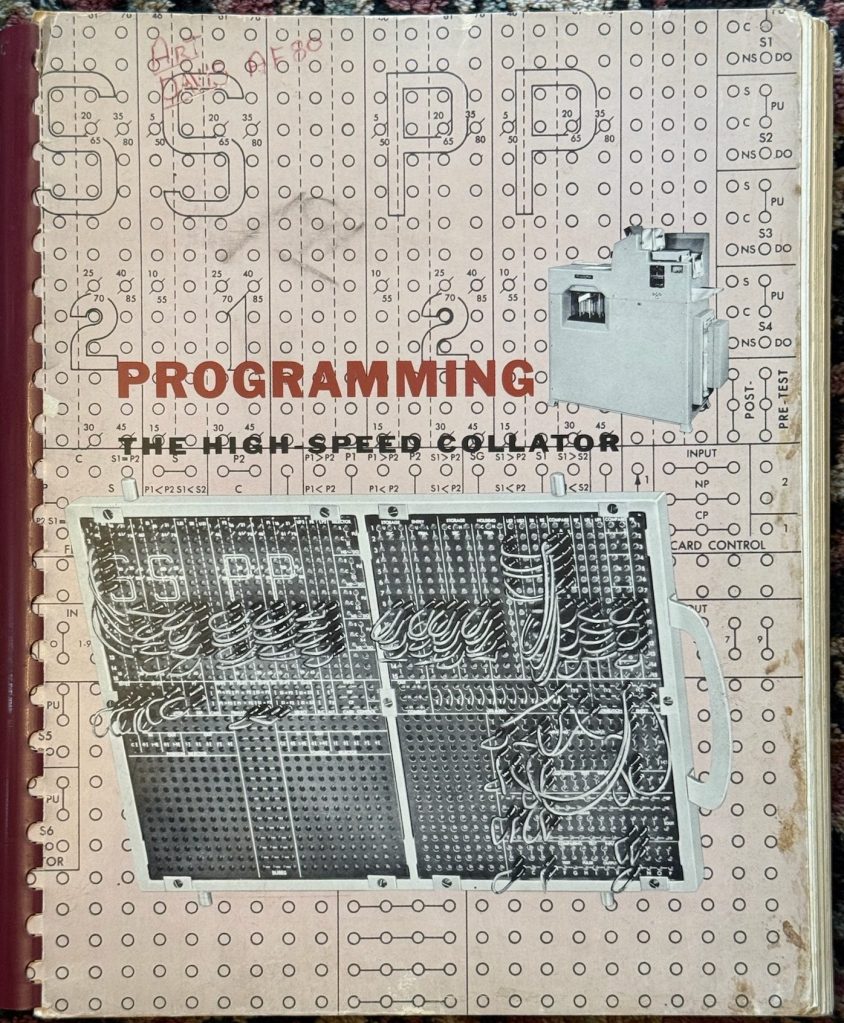
- Relay calculator: A device that uses electromagnetic relays to implement the logic of a (usually digital) calculator. Harvard University developed several relay calculators during and after World War II. Simpler machines, including punched card collators, performed simple data processing operations using relays.
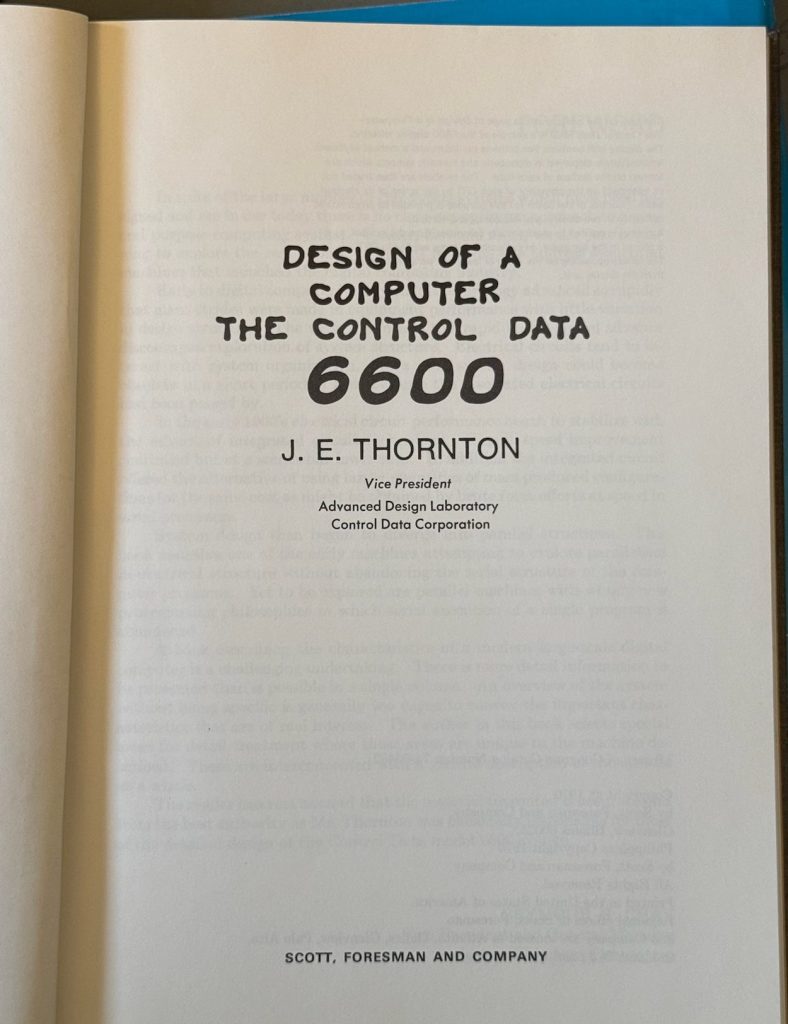
- Supercomputer: a computer designed to perform complicated mathematical programs at the highest possible speeds. This requires sophisticated computer architecture beyond the classical elements of Whirlwind-based computer designs. Early supercomputers were built in the late 1950s and early 1960s. The most important pioneering supercomputer was arguably the CDC 6600 designed by Seymour Cray.
- Transistor: A small electronic device that amplifies or switches a signal using special “semiconductor” material. Following their development in the late 1940s, transistors replaced vacuum tubes in older electronic equipment. Transistors were much more reliable than vacuum tubes, and their adoption made electronic computers practical. Integrated circuits incorporate multiple transistors and other components into a single device to lower production costs further.
- Whirlwind: A pioneering electronic computer developed at MIT in the late 1940s. Its design inspired numerous subsequent computers, notably IBM’s “scientific” computers and DEC’s minicomputer products.
Provenance
The provenance of these items came from three separate collections. Upon request, I will provide a provenance certificate describing the ownership history of any of these items.
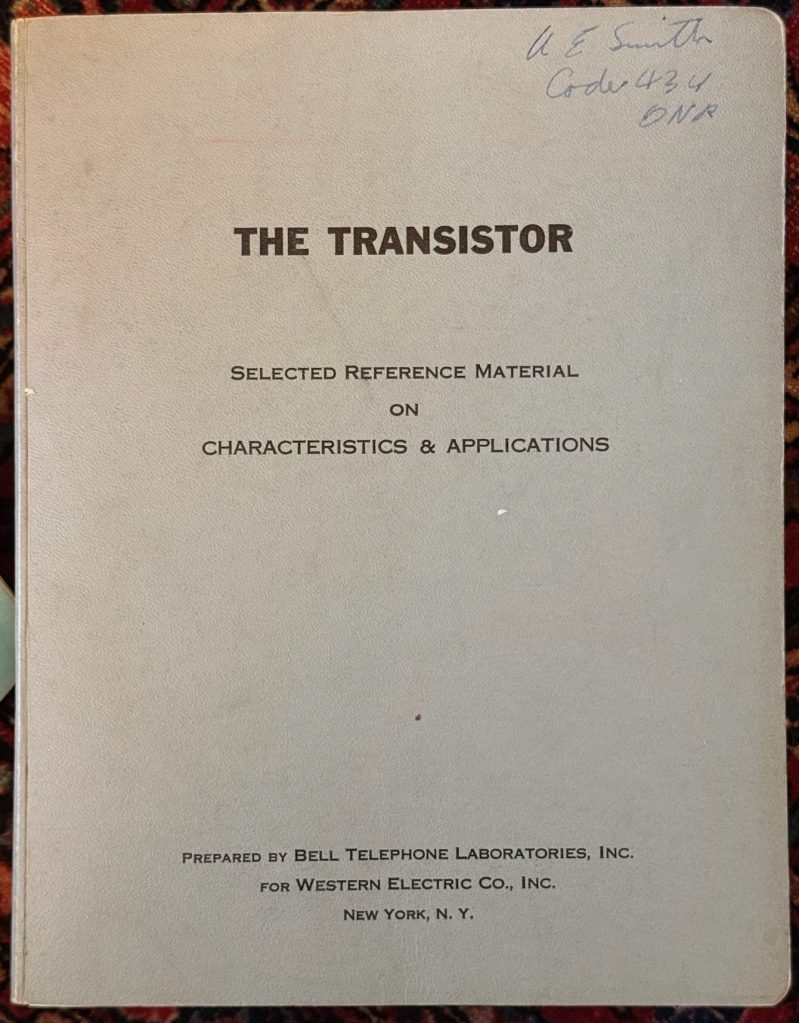
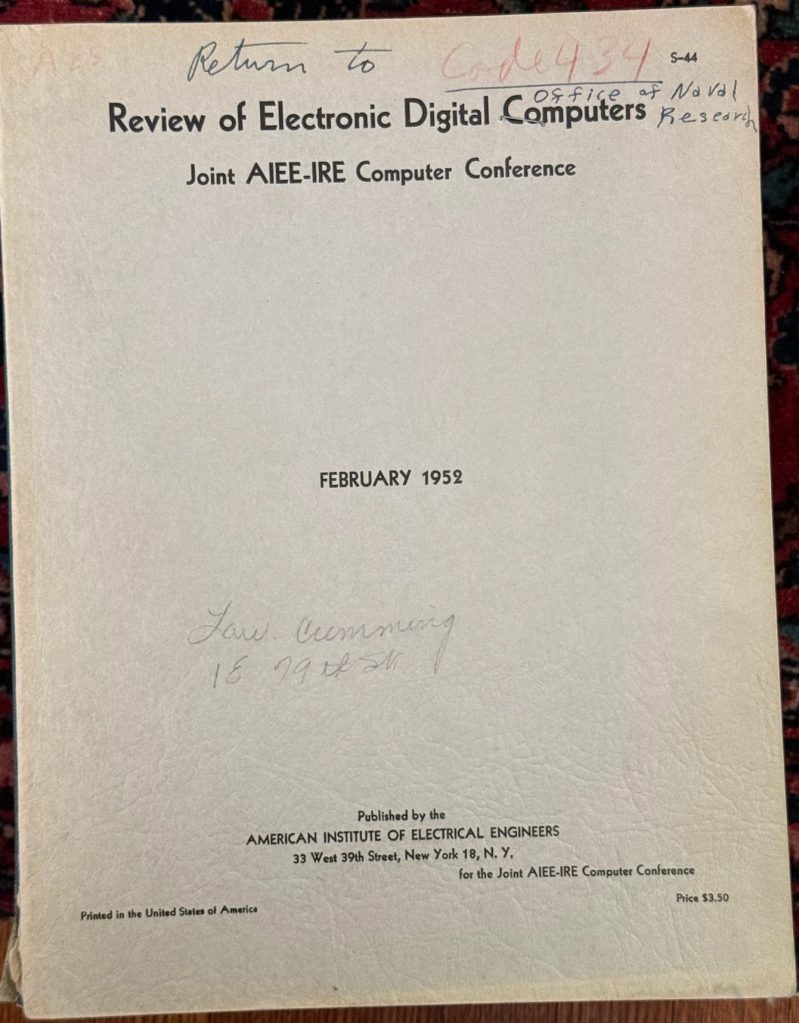
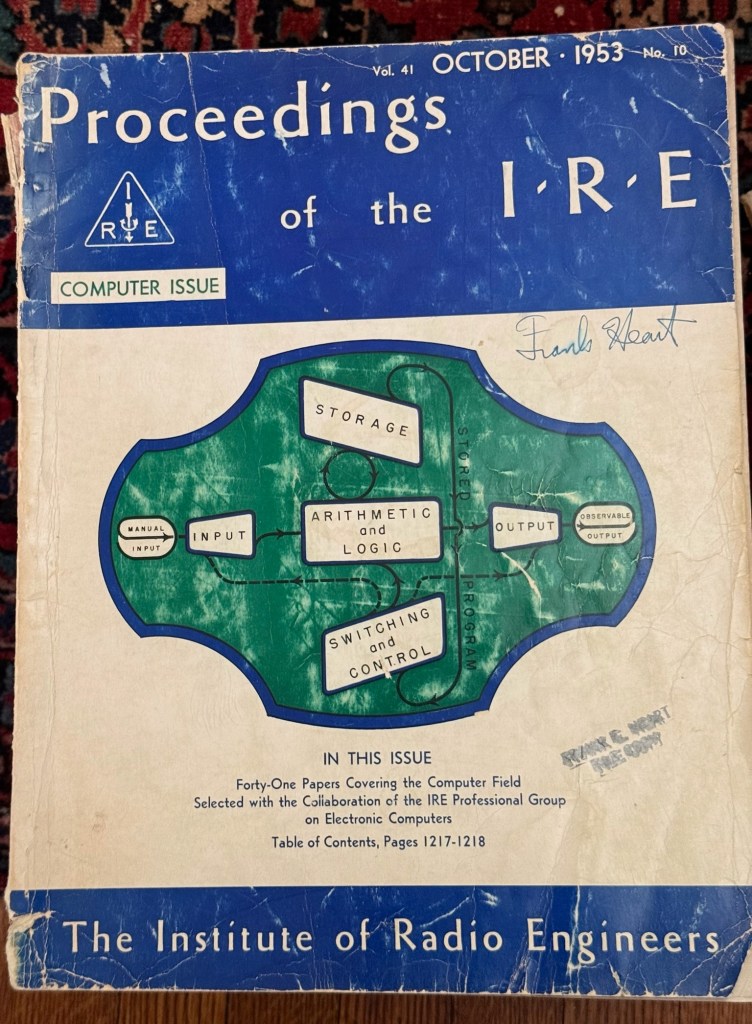
I personally acquired most items after 1970 at or near the time of creation. Some earlier items, notably those owned by the late Frank Heart of BBN, came from the dissolution of the BBN Division 6 library around 1980. Most earlier items belonged to my late father, Albert E. Smith, who oversaw computer projects for the US Navy starting in the mid 1940s.
Less Notable Items
The items shown above are among the most notable items in the sale. We must shrink our household library by about 50%. My father’s contributions form a very small part of what I must sell. I spent over 30 years in the cybersecurity community. Most of my computer books are about network security, cryptography, security architecture, and computer crime. My interest in security architecture extended to hardware design, so there are a few works on computer architecture. There are also vintage copies early computing periodicals including the first volumes of ACM Computing Surveys, Annals of the History of Computing, and perhaps others.
Non-computer book topics include old SF paperbacks, photography, book production, and miscellaneous technical works.
We built over 100 linear feet of bookshelves into the Victorian home we are leaving. Most shelves are in a room traditionally called the “library.” We added almost half again as many shelves when we renovated upstairs, including a library ladder. This ladder conveniently lines up with the hatch for entering the unfinished tower room. Including moveable shelves, we had over 160 linear feet of bookshelves.
Our new home is a Craftsman-style home with less than 30 feet of builtin bookshelves. When we add in our movable shelves, we have 85 linear feet. We must eliminate half of our library.
Rights
While the text and images in this post are all my own work, I do not necessarily hold the trade marks shown here nor the copyrights on books or book cover art. I intend this post to provide an educational purpose to my readers.
Insofar as I do hold rights to this material, I publish it under the Creative Commons Attribution license. If you use my material, please attribute it to Cryptosmith. Thank you.


You must be logged in to post a comment.