I found this in my files. I no doubt intended to publish it months ago and forgot to finish it and press the button.
Senior government officials traditionally restrict defense-related conversations to special locations to prevent eavesdropping. The most secret conversations occur in places like the White House Situation Room or protected command centers in military sites.
The officials also declare the conversation to be classified information. This “classification decision” brings to bear numerous physical and technical defenses to prevent the information from leaking to people who don’t need to know it.
The Mistake
If one of the Signalgate officials had said that the discussion was classified, none of this would have happened. The defenses for classified information block journalists from eavesdropping. They also block very sophisticated attacks by countries who might want to harm or just embarrass the US. For example, “embarrassment” could arise from Houthi missile batteries knowing to aim for our incoming F-18s, risking pilots and planes.
Many of the participants are Trump appointees who did not serve in the earlier administration; they probably had no experience with military secrecy and classified information. Those with some experience realized how hard it would be to carry on this conversation in a classified setting, and did not rock the boat.
According to the Espionage Act (18 US Code, Chapter 37, paragraph 793), federal officials are required to protect defense secrets from leaking to people not authorized to receive them.
None of the administration people had much experience with the military/defense/intelligence community. If they had, they would have recognized the risks they were taking.
If a meeting in one place includes people from elsewhere, they use special equipment to keep the conversation from leaking out.
Cold War Paranoia
Old people like me often joke about “Duck and Cover” air raid drills from our Cold War school days. Those of us who lived near a major target, like the Pentagon, knew a nuclear strike would incinerate our school, our desks, and ourselves. Our joking hid the serious worry that America might suffer nuclear annihilation.
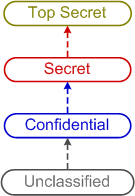
The modern classification system evolved during the Cold War. “Top Secret” could mean “information that might allow a successful nuclear strike on Washington, DC.” This focused administration officials on security, since their own physical safety depended on keeping things secret.
 Cryptosmith
You must be logged in to post a comment.